Get Full Government Meeting Transcripts, Videos, & Alerts Forever!
Get email alerts on the Smart Growth Overlay topic
No spam. Unsubscribe anytime.
Planning Board weighs Smart Growth overlay for hospital and MBTA parcels amid cleanup questions
Summary
The Lakeville Planning Board discussed expanding the Smart Growth Overlay District to include the hospital site and part of MBTA property, weighing 40R housing incentives against existing 40B approvals and remediation needs; members also explored Superfund/Brownfields options and potential mixed‑use zoning.
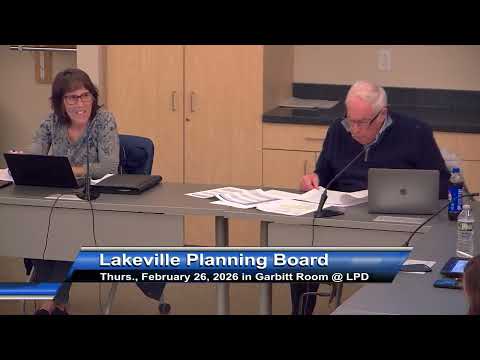
The Lakeville Planning Board spent the bulk of its Feb. 26 meeting discussing whether to pursue expansion of the town's Smart Growth Overlay District to include the hospital site and a portion of MBTA property, a change that could allow higher‑density housing or mixed‑use redevelopment.
The discussion focused on who would benefit and what obstacles exist. Chair said the board had previously explored rezoning the hospital site as a 40R district but recalled that advice from the Executive Office of Housing and Livable Communities (EOHLC) and the project's prior 40B approvals complicated that option: "because it already had an approved 40B... it would not likely be approved as a 40R district," a board member summarized based on prior correspondence in the packet. The board also noted the state's surplus‑land process for MBTA parcels and that Lakeville did not yet appear on DAM's published list of sites targeted for residential RFPs.
Board members raised tradeoffs between potential state incentive payments under 40R and the town's long‑term fiscal obligations: one member observed that the one‑time student aid per unit is smaller than the actual annual cost of educating a new student, calling the state payment "a short‑term gain, long‑term loss." Members also discussed mixed‑use approaches that would retain commercial frontage on Main Street while permitting denser development behind it.
Cleanup and site condition emerged as a separate, substantial concern. Several members urged studying federal and state remediation pathways — including EPA Superfund and state Brownfields programs — because contamination in the underlying soils and possible asbestos in buildings could limit redevelopment options or raise cleanup costs. "Something's got to be done about that," a member said, urging the board to pursue information about whether the site could qualify for federal Superfund or state Brownfields funding and how building remediation would be handled.
Members also discussed practical constraints: previous subdivisions of the hospital property, the presence of existing permits (40V/40B/assisted‑living permissions), and the difficulty of changing approvals once granted. The board agreed that further investigation is needed and asked staff to seek clarification from town counsel and EOHLC about: (1) the likelihood of a 40R designation given prior 40B approvals, (2) the potential fiscal impacts to the school budget, and (3) remediation pathways and who would be eligible to apply for cleanup funding.
Next steps: the board signaled interest in exploring a mixed‑use revision to current zoning regulations and in obtaining more information on Superfund/Brownfields processes and the MBTA/DAM surplus‑land notification path. A member said he would prepare sketches of potential mixed‑use layouts to stimulate public discussion at a later date. The board did not take any formal vote on zoning changes at the Feb. 26 meeting.