Get Full Government Meeting Transcripts, Videos, & Alerts Forever!
Get email alerts on the School Transformation topic
No spam. Unsubscribe anytime.
How one LAUSD elementary turned asphalt into habitat: Esparanza’s decade of greening
Summary
Esparanza Elementary transformed decades of asphalt into native habitat, planting 32 shade trees and removing 30,000+ sq ft of blacktop through iterative projects with community partners; educators say the new campus supports instruction, social-emotional learning and biodiversity.
Esparanza Elementary has spent more than a decade converting asphalt into a living schoolyard, a project principal Brad Rumble and partners say that has reshaped instruction, student well-being and neighborhood engagement.
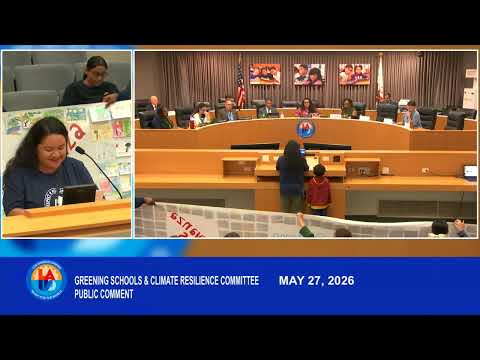
Rumble described incremental work since 2014—planting street trees, removing unused asphalt, partnering with community organizations and developing a native-plant habitat that serves as a living laboratory. "Big things are happening on Little Street," Rumble told the committee, recounting field trips, student-driven bird‑watching contests and a campus culture that now centers outdoor learning.
Project scope and partners: Adriana Garcia, project manager with the Los Angeles Neighborhood Land Trust, said the comprehensive phase removed more than 30,000 square feet of asphalt, added roughly 32 new shade trees and about 15,000 square feet of California native plants to support local ecology and reduce heat. The Land Trust led a year-long construction phase and coordinated community stewardship days.
Classroom benefits: TK/kindergarten teacher Cynthia Barlo described how regular outdoor lessons build social-emotional skills and improve retention. Barlo takes students into the habitat to practice observational science and vocabulary; kindergarten student Briana told the committee, "I am excited for my new playground. I am most excited for the grass." Fifth grader Isaiah said the campus had become "basically a park," and acknowledged months of restricted play during construction were a worthwhile sacrifice for the permanent benefits.
Community impact: Parent and community representative Balvina Hernandez described increased parent engagement, the calming effect of shaded spaces, and fewer playground injuries due to soft surfaces. Rumble and partners emphasized stewardship, iteration and community involvement as keys to sustainability—and said they now offer to share lessons learned with other schools.
What comes next: The school and partners will continue maintenance and monitoring, build a parent field guide to campus trees and support replication at other sites. Committee members praised Esparanza as a model but urged the district to shorten timelines for other campuses seeking similar work.
Speakers quoted in this article include Brad Rumble (principal), Adriana Garcia (LA Neighborhood Land Trust), Cynthia Barlo (teacher), Briana (student) and Isaiah Hernandez (student).