Get Full Government Meeting Transcripts, Videos, & Alerts Forever!
Get email alerts on the Stormwater Fee Implementation topic
No spam. Unsubscribe anytime.
Upper Southampton officials outline new stormwater fee, cite $736,000 estimate and resident appeals process
Summary
Upper Southampton officials and the municipal authority described a new impervious‑surface stormwater fee to comply with Pennsylvania MS4 requirements, explained credits and appeals, and answered residents’ billing and monitoring questions. Estimated first‑year collections are $736,000.
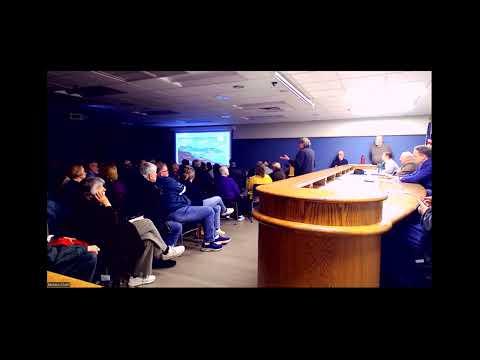
Upper Southampton Township and the municipal authority presented details of a new stormwater fee tied to measured impervious surface and described how the fee will fund state‑mandated MS4 stormwater work.
Officials said the township transferred ownership of its stormwater system to the Upper Southampton Municipal Authority late last year so the authority — which holds the necessary permits, equipment and staff — would manage required repairs and projects. A township official said the board of supervisors "voted unanimously to approve both the transfer and the fee step." The fee will be collected through the water bill rather than as an assessed‑value tax.
Why a fee, not a tax: Officials explained that a tax based on assessed property value would not reflect impervious cover (driveways, roofs, parking lots) that creates runoff; by contrast the fee is based on measured impervious surface so similar runoff generators pay similar amounts. "We transferred the ownership of that for no money," an official said, adding that conditions on the transfer require that all fees collected be used only for stormwater projects and that the authority cannot sell the system to another company.
Estimated collections and accounting: Officials said the authority expects to bill roughly $736,000 in stormwater collections in the fiscal year and that those funds will be reconciled separately to show what is collected and how it is spent. The authority will bill property owners via existing water‑billing cycles; some residents were told their first quarterly stormwater charge will appear on a March bill depending on their billing cycle.
Credits, appeals and workshops: Staff described credits available to reduce bills — including illicit‑discharge credits, structural best‑management practice credits and rain‑barrel credits — and said the maximum credit is 30 percent. The authority will accept appeals if a property owner disputes the recorded impervious area; residents can request a site inspection or complete an online appeal form. Officials said a rain‑barrel workshop (in partnership with the township’s Environmental Advisory Council) is planned for March to help residents install qualifying systems.
Expert presentation and property‑level measures: Jim Walter, vice president of the Cham Watershed Association, gave a public presentation on stormwater causes and solutions. He described how impervious surfaces increase runoff and erosion and highlighted homeowner options such as rain gardens, tree trenches and native‑plant buffers to increase infiltration. "Storm water is the water that runs off lawns, driveways, streets, parking lots, houses during any precipitation event and it goes into drains," Walter said.
Resident questions and monitoring concerns: Several residents pressed officials on fairness and monitoring. Questions included why large but vegetated lots may pay the same as smaller lots with more impervious area, how gravel or dirt driveways are classified, and why some residents received bills earlier than others. One resident asked for monitoring data (sample points and tonnage of silt upstream and downstream), saying upstream jurisdictions’ practices can negate local work; officials acknowledged monitoring gaps and said they will pursue inspections and seek grants but did not provide a monitoring plan or specific sampling locations at the meeting.
Implementation and staffing: Officials said many repairs and projects will be handled by existing authority and township staff to reduce contracting costs, and that they do not foresee immediate large‑scale hiring. They emphasized a severity‑based approach to handling problem sites and noted continued efforts to pursue outside funding where available.
What happens next: Staff said slides and the parcel flyover (impervious‑surface) data will be posted online, inspectors will follow up on appeals and requests for site visits, and residents should contact the authority office or use the appeal form if they believe their parcel’s impervious area is recorded incorrectly. The authority emphasized that fee revenues must be spent on stormwater projects only.
The meeting closed with organizers saying they could not answer every question in the session and promising follow‑up communications and future public information opportunities.