Get Full Government Meeting Transcripts, Videos, & Alerts Forever!
Get email alerts on the Budget Reserves Staffing topic
No spam. Unsubscribe anytime.
Revere Public Schools officials outline $2.7M structural shortfall, discuss reserves and staffing cuts
Summary
At an April 28 committee meeting Revere Public Schools leaders reviewed third-quarter finances showing a $2.7 million structural deficit, an unexpected $2.1 million circuit-breaker-related surplus that reverts to the city, and plans to use district reserves while debating proposed cuts to health technicians and leadership positions.
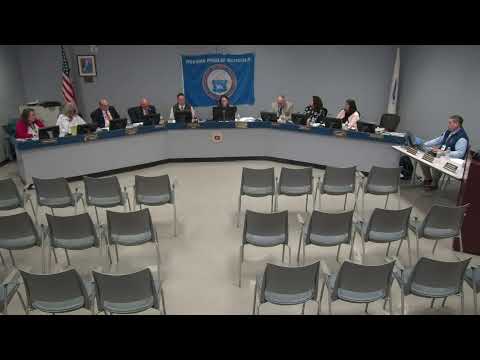
Revere Public Schools leaders told the School Committee of the Whole on April 28 that the district faces a structural budget shortfall of roughly $2.7 million and is relying on reserve funds and pending state budget actions to avoid large layoffs.
"This is just saying to you, 'Hey, based on the current year's budget and appropriation and spending, how are we doing through three quarters?'", a district presenter said while reviewing the quarterly report, which identified the 9000 series (out-of-district special-education tuition) as the primary red account. Officials also said a state boost to circuit-breaker reimbursement created a $2.1 million surplus in transportation-related funds that is treated as city money and therefore reverts to the municipality.
Superintendent Dr. Kelly told the committee that the district has been using a multi-year reserve strategy created in FY21–22 to smooth an anticipated fiscal ‘cliff’ after federal SR funding ended. She said the district has sought to mobilize reserved funds so that spending can be sustained as enrollment declines and state funding remains uncertain. "If we can make that last over 3 years, I think we'll be in a place where the state has redefined the chapter 70 formula," she said, adding that the district has been conserving funds to avoid immediate large-scale layoffs.
Committee members pressed for specifics. Member Ms. Monterroso asked about transportation purchases and MBTA passes; staff explained those purchases appear on grouped invoices and are paid from city-embedded transportation funds. Members also asked about assistant principals and leadership counts after staff noted five assistant principals at the high school, two at middle schools (corrected during the meeting) and variable assistant-principal staffing at elementary schools.
Several members urged retaining some health technicians even as the administration proposes cuts. "I really believe those four health techs that are still with us stay on at least to do hearing and vision," said one committee member, citing year-round screening duties and coverage when nurses are occupied. Dr. Kelly and other staff described an intentional increase in registered nurses (from pre-COVID counts to 15 full-time nurses) and the historical use of SR grant funding to support health technicians; as federal grants ended those positions were reduced.
The administration presented staffing trends since 2019, saying the district added 242 full-time positions over that period, including 183 instructional roles; staff noted leadership grew by about 12 positions. In response to claims that the district is "top-heavy," Dr. Kelly said the district has "1,300 employees and we have 59 administrators who supervise all of them," and that administrators' legal and procedural responsibilities have grown substantially.
Committee Chair John Kingston and staff scheduled a Ways & Means meeting for the first week of May to review a version 3.0 of the budget that will incorporate House numbers and adjustments for unfilled positions; the committee may hold additional meetings once the Senate/House reconciliation numbers are available.
What happens next: the Ways & Means Subcommittee will continue detailed review in early May; the full committee may vote on budget measures later in May or at the June meeting depending on reconciliation outcomes. The meeting discussed, but did not finalize, proposed staffing changes; formal votes on specific cuts were not recorded at the April 28 session.