Get Full Government Meeting Transcripts, Videos, & Alerts Forever!
Get email alerts on the Remote Attendance topic
No spam. Unsubscribe anytime.
Winnebago County board narrows remote-attendance rule to committees, keeps in-person voting for county board meetings
Summary
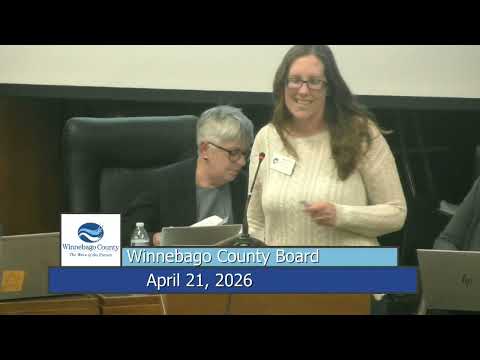
After hours of debate, the Winnebago County Board on April 21 adopted a rules change allowing remote participation for committees and commissions but preserved in-person voting at county board meetings by amending rule 11.6; the board also added a new provision limiting late "call the question" motions.
The Winnebago County Board of Supervisors on April 21 adopted a limited remote-attendance rule for committees and commissions while retaining the requirement that votes at county board meetings be cast only by supervisors physically at their desks. The change followed extensive debate over accessibility, legal risk and public trust.
Supervisor Amber Hancock-Cook introduced the measure to create rule 1.4, arguing remote participation would reduce barriers to service and prevent cancellations caused by quorum shortfalls. "This resolution could reduce the barriers for participation for many people and help us to increase the choice for our citizens," Hancock-Cook said during floor discussion. Supporters added that committee work is sometimes canceled because members cannot travel to meetings and that remote options can help retain experienced citizen appointees.
Opponents, including Vice Chair Randy Hanson, raised legal concerns and warned about the loss of face-to-face deliberation. Hanson cited state statute and court precedent discussed during the meeting, saying the body should default to in-person attendance and that remote attendance risks undermining public confidence. "There is direct correlation... when you don't look at each other anymore," Hanson said, urging colleagues to preserve in-room interaction.
The board considered three drafts. A broad option that would have permitted remote participation for county board meetings failed in a machine vote. The board then approved a narrower second option by electronic vote allowing remote attendance for supervisors and citizen members at committees, commissions and boards but excluding county board meetings. To remove ambiguity, supervisors later amended rule 11.6 to read: "All votes cast at a county board meeting shall be cast only if the supervisor is present at his or her desk." That amendment carried on a voice vote.
The session also adopted a new procedural rule, numbered 12.9, intended to discourage members from attaching a motion to end debate ("call the question") onto the end of their speaking time to cut off others. The board adopted 12.9 by voice vote after members said it would help ensure a fair opportunity for members to speak.
Several supervisors acknowledged the trade-offs. Supporters stressed flexibility and equitable access; opponents warned of reduced public-facing deliberation and cited legal precedent. Corporation counsel offered guidance on drafting language to preserve in-person roll call at county board meetings while enabling remote participation in committees.
With the adopted amendments, committees and commissions may permit remote voting subject to the new rules and any chair-granted allowances; county board roll-call votes must be made in person at a supervisor's desk. The board did not create a blanket remote option for county board meetings and left enforcement and detailed administrative procedures to staff and counsel.
The board is expected to circulate final, codified rule text and guidance to supervisors and committee chairs in the coming weeks.