Get Full Government Meeting Transcripts, Videos, & Alerts Forever!
Get email alerts on the Renewable Energy topic
No spam. Unsubscribe anytime.
Hurley board to review original approval after applicant asks to waive required tree screening for 7 MW solar array
Summary
An applicant who installed a 7‑megawatt solar array asked the Hurley Planning Board to waive previously required plantings (three blue spruce); the board agreed to pull the original resolution, review the record and conduct a site visit and neighbor outreach before deciding whether to allow an amendment.
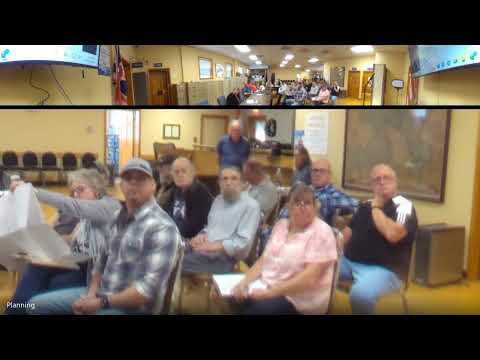
The Hurley Planning Board opened a lengthy debate about whether to amend a prior condition requiring landscape screening around a newly installed 7‑megawatt solar array, with the applicant seeking to eliminate or change the required blue spruce plantings.
The applicant said the planting requirement was impractical at the installed elevation and argued the proposed trees would be ineffective; the applicant described the lengthy permitting process and costs, noting it took about 18 months and roughly $2,000 to obtain approvals. Neighbors countered that the plantings were a negotiated condition that helped secure neighbor consent during the original approval and said they had filed complaints when the landscaping was not installed as required.
Planning staff and board members said the original site plan or special‑use approval included landscaping conditions and recommended the board pull the original resolution and minutes to confirm the exact language before deciding on any amendment. Staff also reported that an inspector signed off on a certificate of compliance but that the planning board’s conditions might still be enforceable because the landscaping condition came from the planning approval process.
Why it matters: The board must balance the applicant’s operational concerns—tree survivability and visual fit—with neighbors’ expectations and the record of a prior approval that relied on screening to mitigate visual impacts. Board members suggested a site visit, review of the approval documents, and re‑engagement with neighbors so the board can consider a formal amendment rather than an immediate waiver.
What’s next: The board will retrieve the original approval and map, schedule a site visit to assess tree canopy and sightlines, and determine whether the applicant’s amendment request should be considered via a formal public hearing or an administrative amendment. No final decision or vote to amend was recorded at the meeting.
Representative remarks from the discussion included a board member’s framing of the condition as negotiated with neighbors at the time of approval and staff’s note that "the approval included a caveat and the caveat included planting of trees."