Get Full Government Meeting Transcripts, Videos, & Alerts Forever!
Get email alerts on the Land Use topic
No spam. Unsubscribe anytime.
Council adopts broad land-use code rewrite, removes cannabis from downtown historic commercial district
Summary
The Silver City Town Council adopted Resolution 2025-32 to amend the 2010 Land Use and Zoning Code and retitle it for 2025. Amendments include reduced minimum lot sizes, a minor-subdivision procedure, technical fixes and a deletion that removes cannabis as an allowed use in the commercial historic district; the Planning & Zoning Commission had recommended approval.
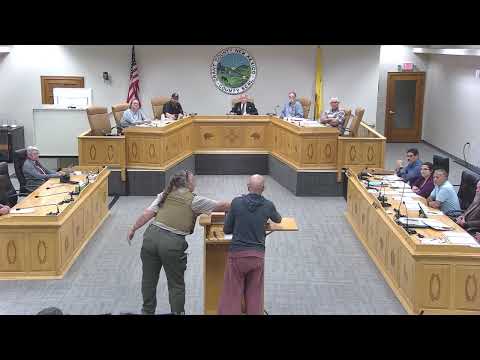
The Silver City Town Council approved Resolution 2025-32, a package of amendments to the town's Land Use and Zoning Code, adopting the changes as amended at the meeting.
Staff described the amendment package as a multi-part update to align the 2010 code with current conditions and the town's strategic housing plan. Among the changes staff highlighted were reductions in minimum lot size (from 5,000 square feet to 2,500 square feet in some zones), removal of certain frontage requirements, creation of a minor-subdivision process for 10 lots or fewer, and other procedural clarifications intended to facilitate housing and infill development.
Planning & Zoning Commission Chair Simon Wheaten Smith had told the council the commission unanimously recommended approval after hearing two third-party testimonies on Oct. 7. He also flagged a typographical concern and asked that a definition of "majority" be changed from the consultant's "more than 50%" wording to Robert's Rules phrasing "more than half." The council adopted that technical correction as part of its amendments.
During debate, Council Snider moved to amend the resolution to remove cannabis as an allowed use in the commercial historic district (Table 3.2). That amendment was seconded and discussed; the council defended a time, place and manner approach while also describing the downtown historic commercial district as a tourist-oriented area deserving protections to preserve its character. The council then incorporated additional recommended edits from Council Cono (including ADU clarifications, buffer distances and references to PUD process removal) and voted to adopt the resolution as amended.
Town Attorney Charles Credit explained local control provisions in the state's cannabis statute allow jurisdictions to adopt time, place and manner regulations "that do not conflict with the act," accommodating reasonable local limits on density and operating times. The council's recorded roll-call vote adopted the amended text unanimously.
The Planning & Zoning Commission and staff will continue the process of finalizing the ordinance language and administrative steps; council members said the revised code aims to increase housing flexibility and clarify procedural definitions while preserving the character of the historic downtown.
The council instructed staff to process the final ordinance language consistent with the adopted amendments.