Get Full Government Meeting Transcripts, Videos, & Alerts Forever!
Get email alerts on the Land Use topic
No spam. Unsubscribe anytime.
Council introduces ordinance to adopt 2025 California building standards and clarify local rules
Summary
In a first reading the council introduced ordinance 491-2026 to adopt the 2025 edition of the California Building Standards (Title 24) into Weed's municipal code, add a local sprinkler requirement for new manufactured homes, and add language limiting water service to condemned properties; second reading and public hearing to follow.
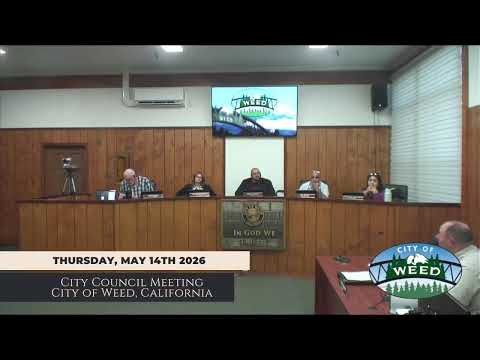
The Weed City Council held the first reading of ordinance 491-2026 to update the municipal code with the 2025 California Building Standards (Title 24) and to resolve inconsistencies and older citations in the city code.
Proponents said the update will make it easier for contractors and developers to understand requirements, reduce confusion caused by multiple code versions, and align local practice with state standards. City staff highlighted two local clarifications: a provision to allow staff to withhold water service to vacated or condemned buildings, and an added requirement supporting the fire chief's recommendation for sprinklers in new manufactured homes.
Council members asked whether the changes would make building in the city more restrictive than building in the county and whether the changes could unintentionally affect homeowner options such as accessory dwelling units. Staff and the city attorney said the proposed ordinance largely adopts state law as the floor and that the sprinkler requirement for manufactured homes is a limited addition beyond state minimums; the item will return for a second reading and public hearing, when the building inspector will be asked to present specific differences between the city and county rules.
What happens next: the ordinance was introduced at first reading and will return for a second reading as a public hearing where the building inspector and interested residents can comment before the council considers adoption.