Get Full Government Meeting Transcripts, Videos, & Alerts Forever!
Get email alerts on the Municipal Budget topic
No spam. Unsubscribe anytime.
Woodbridge previews 2027 budget, warns property taxes will fund most of next year’s spending
Summary
Town Finance Director Tony Gionfriddo told a preliminary budget hearing that 92% of the proposed 2027 budget is funded by property taxes, the proposed property mill rate would rise from 32.62 to 34.02, and long-term borrowing plans could push peak annual debt service toward $7.7 million.
The town of Woodbridge presented a preliminary $62.28 million budget for fiscal 2027 on April 28, with officials warning residents that property taxes will continue to shoulder the vast majority of the town’s revenue needs.
Tony Gionfriddo, the town’s finance director, told the assembled Board of Finance, Board of Selectmen and residents that 92% of projected 2027 revenues come from property taxes and that department charges and state grants account for small shares. “92% of the revenues in the 2027 budget are from property taxes,” he said, and noted department charges rose about 4% while state grant revenue is under 2% of the total.
Gionfriddo highlighted a major change in intergovernmental revenue: the motor vehicle reimbursement grant is projected to fall sharply, reducing anticipated revenues by roughly $1.6 million. He attributed the shortfall to the town’s recent revaluation and the mechanics of the state motor vehicle mill-rate program that ties aid to differences between the town rate and the statewide motor vehicle mill rate.
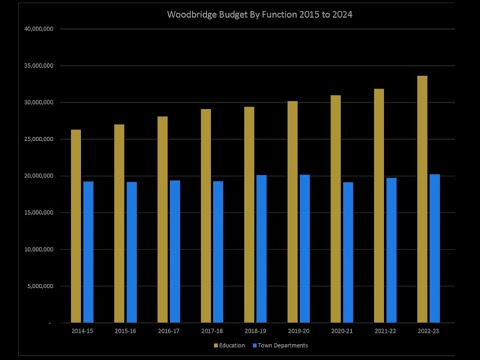
On the expenditure side, officials reported education remains the largest share of the budget at about 63.5% of total spending. The town portion of the budget is projected to rise about $313,000 (1.4%), the Woodbridge Board of Education budget about $535,000 (2.9%), and Amity’s town portion about $333,000 (1.65%). The overall spending increase from 2026 to 2027 is roughly 1.93%.
Gionfriddo also outlined capital needs and long-term debt assumptions. The town’s capital plan includes an estimated $80 million in borrowing for projects that include a police facility renovation, center building improvements, multiple roof replacements, HVAC upgrades, and $1 million in road improvements. He said the debt schedule used in the analysis shows a peak annual debt-service obligation of about $7.7 million before it declines.
The presentation proposed a property mill rate increase from the current 32.62 to a proposed 34.02 for 2027. “The proposed mill rate goes up to 34.02,” Gionfriddo said. Officials emphasized that borrowing described in the presentation would still require town approval — either by town meeting or referendum — before any bonds are issued.
Why it matters: the town relies heavily on property tax collections, and reductions in state aid or large capital borrowing can shift costs onto homeowners. The hearing drew a steady stream of resident questions about the effect on their tax bills, the prospects for state reimbursement on school projects and whether new development could offset some borrowing costs.
The town scheduled the annual budget referendum for the upcoming Tuesday and the annual town meeting for Monday, May 18. The hearing continued with a department-by-department review of the proposed budget.