Get Full Government Meeting Transcripts, Videos, & Alerts Forever!
Get email alerts on the Public Health topic
No spam. Unsubscribe anytime.
Bangor council accepts health grants as Needle Point Sanctuary shifts downtown syringe services
Summary
Council accepted federal and local grant funding to support HIV early‑intervention services while Needle Point Sanctuary announced the Park Street syringe‑service pilot will end Aug. 31 and move operations to Ohio Street.
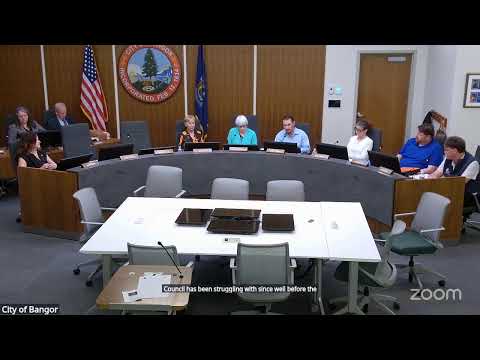
Bangor — The City Council on May 27 approved measures to accept and appropriate public‑health funds as local service providers adjust operations amid a reported HIV cluster.
Council unanimously approved a resolve authorizing the city manager to accept $80,000 from Maine General to implement Ryan White Part C outpatient early‑intervention services for HIV for the April 1, 2026–March 31, 2027 period. Council also advanced a separate referral to accept $685,221 in HUD funds for a Bangor rental assistance program and approved a $250 stipend from the Maine Primary Care Association to cover preparation and presentation of the ROSE program (Reach Out, Stay Strong, Essentials for New Mothers).
At public comment, William Hurley, executive director of Needle Point Sanctuary, said the organization would shift syringe services away from Park Street to its Ohio Street location and end the Park Street pilot at 5 p.m. on Aug. 31. Hurley provided program counts for Park Street: 1,679 service encounters, 4,461 naloxone doses distributed, and more than 156 reported overdose reversals as a result of naloxone dispensed by the program. He said Park Street will continue to offer testing, recovery referrals, and wraparound services on Tuesdays until the full shift.
Councilors asked how retroactive pay and grant accounting would be handled after staff said the positions had been supported through other grant funding streams pending formal approval; Jen Gunnerman, director of Bangor Public Health and Community Services, explained staff time would be reallocated so the new funding streams can retroactively cover the work.
The council’s votes on funding were unanimous; several councilors asked staff for grant documents and details about allowable uses and reporting to ensure fiscal transparency.