Get Full Government Meeting Transcripts, Videos, & Alerts Forever!
Get email alerts on the Land Use Development topic
No spam. Unsubscribe anytime.
Residents call Colton Ridge plan a 'mine'; board closes hearing and allows seven-day comment extension
Summary
At a Feb. 5 public hearing, Brunswick residents urged the planning board to treat Paramount Building Group’s 18-lot Colton Ridge proposal as a mining operation because it would remove hundreds of thousands of cubic yards of material and generate tens of thousands of heavy-truck trips; the board closed the hearing and allowed a seven‑day written‑comment extension while the applicant prepares written responses.
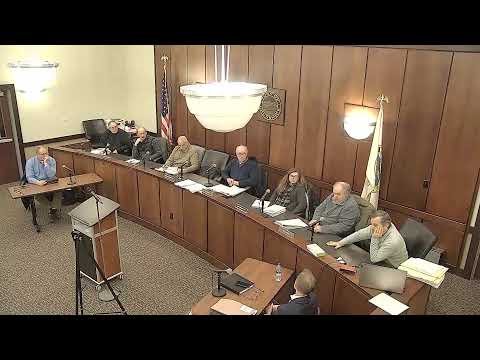
Brunswick, N.Y. — Dozens of residents on Feb. 5 pressed the Town of Brunswick Planning Board to stop what they called a mining operation cloaked as a subdivision, saying the Colton Ridge proposal would permanently alter hills, damage posted roads and threaten wells.
“It's going to take 21,000 large dump trucks fully loaded with 20 yards of material to move all of that material. An equal number will be required to return to the site — 42,000 trucks over one or two years,” said Tim Gilchrist of 186 Creek Road during the public hearing on the 18‑lot Paramount Building Group proposal. He told the board he worked for the DOT for more than 30 years and warned the heavy trucks would devastate pavement and shoulders.
Sarah Nitel, who lives at the project intersection, said the excavation numbers exceed state thresholds and characterized the proposal bluntly: “This project is a mine, not a subdivision.” She said the DEC’s incidental‑removal allowance — which she cited as 750 cubic yards per year — is far lower than the hundreds of thousands of cubic yards resident speakers attributed to the proposal.
The applicant’s representatives disputed that characterization. Matt Bond, the project engineer, described the plan as an 18‑lot subdivision with a new town roadway, water main extensions and on‑site septic systems for each lot, and said the design complies with stormwater rules. TJ Ruain, the applicant’s attorney, told the board that the town and New York State definitions do not characterize the work as a separate mining operation and said the applicant walked the site with DEC and the town to confirm the project is excavation incidental to residential construction.
Why it matters: Residents cited three overlapping community risks — heavy truck traffic and related wear on roads posted for weight limits; potential impacts to private wells and wetlands from deep excavation; and loss of the area’s rolling‑hills character, which neighbors said is central to the town’s comprehensive plan. Several speakers asked the board to require a financial assurance (bond or escrow) for road repairs and to demand a clear hauling plan so town and county authorities can evaluate road‑use impacts.
Key details and claims: Speakers repeatedly cited a 400,000+ cubic‑yard removal figure and translated that into thousands of truck trips and frequent hourly truck movements during active excavation windows. Multiple residents said the project will strip a ridge and leave a pit if home construction does not follow; others cited the lack of an air‑quality or well‑impact analysis in the applicant’s materials. The applicant said the traffic analyses considered construction‑period scenarios (one, 1.5, and two‑year schedules) and that county overweight permits would be required for trucks that exceed posted limits.
Board action and next steps: After extended public comment, the chair moved to close the public hearing but allow an additional seven days for written comments; the motion passed. The applicant agreed to compile written responses and submit them within the comment period. The board tentatively scheduled the applicant for the Feb. 19 meeting to present written responses and follow‑up materials, and staff said they would coordinate with county highway officials and the local fire department on haul‑route and hydrant requirements.
What was not decided: The board did not vote to approve or deny the subdivision on Feb. 5. Several residents asked the board to reconsider the board’s earlier SEQR/negative declaration (challenging its characterization of potential impacts); the applicant and its attorney said DEC had been consulted and that, in the applicant’s view, the project does not trigger mine permitting. The board recorded numerous requests for additional engineering, hauling and groundwater information to be provided during the comment period.
A note on numbers and claims: The 420,000+ cubic‑yard and 42,000‑truck figures cited by speakers were repeated several times; the applicant characterized excavation as site development for residential construction, and said DEC and town staff have reviewed the site. Those contrasting positions were not reconciled at the hearing and remain subject to further written submission and technical review.
The planning board closed the public hearing and will accept written comments for seven days; the applicant’s written responses will be posted to the public record and reviewed by the board and the town engineer before further action.