Get Full Government Meeting Transcripts, Videos, & Alerts Forever!
Get email alerts on the Transportation Noise Policy topic
No spam. Unsubscribe anytime.
Moab council hears residents on UTV noise and asks staff to return with targeted speed and calming proposals
Summary
After multiple residents described night‑time UTV/OHV noise and health concerns, staff told the council state code constrains differential speed limits for street‑legal vehicles and said inconsistent 'OHV 15 mph' signs will be removed while staff develops targeted engineering, education and enforcement recommendations for high‑use routes.
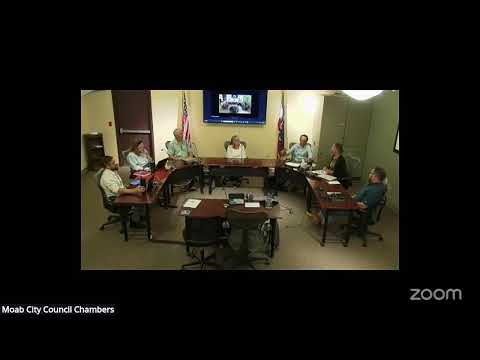
Dozens of residents urged the Moab City Council on March 24 to address excessive noise from off‑highway vehicles (OHVs) that travel through neighborhoods to trailheads. Bill Aggie, who lives on Mill Creek Drive, told the council he and neighbors want a clear plan with timelines, enforcement strategies and a named point of contact to measure success.
The concern drew public testimony from multiple speakers, including Pete Gross and a Love Ridge resident, who described sleep disruption and potential public‑health effects. “Noise is just not a nuisance…at elevated levels it is harmful to humans,” Gross said, citing the city’s OHV noise ordinance (Ordinance 2021‑7).
City staff responded with a legal and operational briefing, telling councilors that state code treats street‑legal vehicles the same and limits the city’s ability to set different speed limits for certain vehicle types. Michael and engineering staff said the city will remove signage that labels a 15 mph “OHV” limit because it conflicts with state law and complicates enforcement. Staff displayed a GIS map of likely street‑legal ATV/UTV routes—Mill Creek, 4th East, 5th West, Cain Creek and others—and warned route data are approximate because the city lacks ATV‑specific counts.
Council members debated whether to designate preferred routes (which some said would concentrate impacts on a few neighborhoods) versus broader traffic‑calming measures. Suggestions included neckdowns, multi‑use pathways, targeted striping and more robust outreach to rental operators and UTV businesses. Several members urged a short‑term package focused on Mill Creek and 4th East as priorities, paired with an education campaign for rental operators and visitors.
Staff committed to return within two meetings with prioritized short‑term recommendations and resource implications covering engineering, education and enforcement. Councilors emphasized enforcement capacity must accompany any speed‑limit or signage changes; staff noted creeping signage errors and the need to coordinate with the police department on warnings and ticketing if speed limits change.
The council did not adopt a policy change at the meeting; instead members directed staff to prepare options and implementation steps, including estimated cost and personnel needs, to present at an upcoming meeting.