Get Full Government Meeting Transcripts, Videos, & Alerts Forever!
Get email alerts on the Food Security topic
No spam. Unsubscribe anytime.
Feed Well Fridges seeks Siler City commissary but needs water‑sewer allotment before 2027
Summary
Feed Well Fridges requested a 13,000–15,000 ft² commissary kitchen in Siler Crossing and said the project depends on whether the town can allocate 850 gallons/day of water/sewer before 2027; the board did not make an immediate allocation but signaled staff follow‑up.
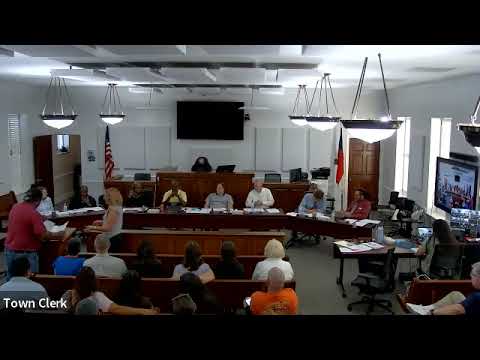
Susan White, founder of Feed Well Fridges and co‑owner of Café Root Cellar, asked the Siler City Board of Commissioners on Monday for help securing space and utility capacity to grow the nonprofit’s food‑rescue and meal production operations.
White told the board Feed Well, which launched in 2023, rescues surplus food for community fridges and produces microwavable meals. "About 95% of this food is edible," she said, describing daily pickups from grocery stores and a volunteer network the group said now totals close to 70 people. She said the nonprofit has rescued roughly 200,000 pounds of food and prepared more than 71,000 meals in two years.
White said the nonprofit identified two vacant spaces at Siler Crossing — one about 20,000 sq ft (Badcock building) and one about 22,000 sq ft (former Belk building) — that could house a 13,000–15,000 sq ft commissary and a shared hub for partner organizations. She said the commissary model would not serve the public directly but would be used for meal production, food sorting and storage, and subleasing workspace to other local nonprofits.
The proposal hinges on water and sewer allotment. White estimated the full buildout would need no more than 850 gallons of water and sewer per day and asked whether the town could guarantee allocation before 2027, when she expects the project would be complete. She said if the town cannot confirm allocation by the end of the year she will pursue alternative sites elsewhere in Chatham County.
Town staff confirmed White had already discussed capacity and allotment procedures with planning and utilities staff, and the utilities director had suggested checking back in about a month as system improvements progress. Commissioners did not take an immediate vote on utility allocation but asked staff to coordinate with planning and utilities to determine whether the requested allocation and timetable are feasible, and to report back.
If approved and built in Siler City, White said the commissary would expand Feed Well’s ability to mass‑produce meals, increase the number of community fridges the nonprofit can support across the region and provide shared space for other local organizations, including Core Food Pantry and Love Chatham.
The board requested staff follow up with a timetable and feasibility assessment; no binding commitment for water or sewer allocation was made at the meeting.