Get Full Government Meeting Transcripts, Videos, & Alerts Forever!
Get email alerts on the Cafeteria Fund topic
No spam. Unsubscribe anytime.
Cafeteria fund, indirect costs and free‑meal proposals draw scrutiny as schools budget for 2026–27
Summary
School finance officials told commissioners they are planning a $2 million indirect‑cost reimbursement from the central cafeteria fund to the general fund as a way to reduce a built-up Fund 143 balance; commissioners pressed whether the money could instead expand free meals and asked for data on meal‑debt and fund sustainability.
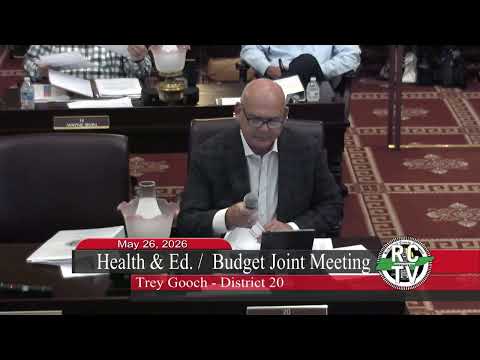
School finance staff told the joint Health & Education and Budget committees on May 26 that Fund 143 (the central cafeteria fund) accumulated a large balance during the COVID era and now needs a formal spend‑down plan. One mechanism presented was a $2 million indirect‑cost reimbursement to Fund 141.
"Indirect costs are incurred for the benefit of multiple programs… the FY25–26 unrestricted indirect cost rate for RCS is 11.19%," school finance staff said while describing the transfer proposal. Staff explained indirect costs reimburse Fund 141 for shared expenses — electricity at school sites, payroll for staff whose time is split across funds, and finance support — that are not coded to Fund 143 but that support food‑service operations.
Commissioners asked whether the fund balance could be used to provide universal free lunch. Commissioner Oliver pressed that question: "Is there a reason why this can't be spent to provide meals for students or assist in that effort?" School finance staff cautioned that a universal free‑meals program would rapidly deplete the fund balance because federal reimbursements are no longer 100% and per‑meal labor and operating costs would exhaust reserves in one to two years. The administration pointed to alternatives — equipment upgrades, facility projects and use of indirect‑cost transfers — as ways to reduce the balance while preserving operational stability.
County finance staff also flagged reporting issues during the presentation: a printed column labelled "estimated through April 2026" did not match live ledger figures. "It looks like that date is wrong… the ledger is right," Michael Smith said; staff promised corrected printouts for the Budget Committee.
Key numbers and context: - Budgeted Fund 143 revenue presented: approximately $26.84 million (majority federal USDA funding). - FY25–26 unrestricted indirect cost rate cited: 11.19% (RCS, as stated by school finance staff). - Staff estimated the cafeteria fund balance in the neighborhood of $15 million (approximate; staff said end‑of‑year figures could change).
What’s next: Health & Education approved the cafeteria item for its committee; the Budget Committee deferred final action pending corrected reports and the certified tax rate. School staff said they will provide updated actuals and indirect‑cost documentation to the Budget Committee.