Get Full Government Meeting Transcripts, Videos, & Alerts Forever!
Get email alerts on the Water Infrastructure topic
No spam. Unsubscribe anytime.
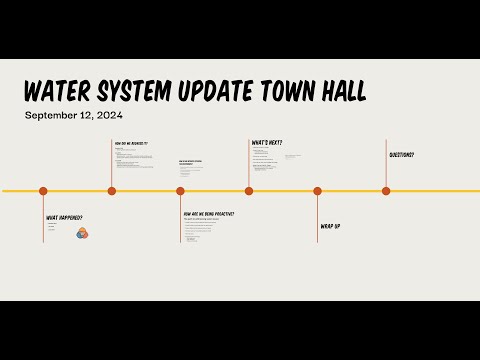
Pleasant Hill officials review June 5 water outage, outline pump‑house work and five‑year plan
Summary
City leaders reviewed three recent systemwide pressure losses (Oct. 2022, July 2023, June 5, 2024), explained emergency responses including a boil‑water advisory and mutual aid, and described planned upgrades: SCADA fixes, variable‑frequency drives at the pump house, a water‑tower rehab and a five‑year capital plan.
Pleasant Hill city officials described the causes and responses to three recent systemwide water outages and laid out near‑term and multi‑year projects intended to improve reliability.
City Administrator Shelby Tufl said the city is treating the review as a chance to fix distinct root causes: an Oct. 2022 SCADA failure that froze remote tank readings, a July 2023 pump‑house failure caused by a broken flange and flooding, and a June 5, 2024 pressure loss tied to a valve‑exercise that opened a line later found to be abandoned and mismapped near ICF Industries. "We did have to issue a boil water advisory because um our pressures had reduced to a level um below what DNR requires," Tufl said, adding that samples showed "there was no ecoli that was found in it."
Why it matters: the panel said these three incidents were different in cause but revealed common vulnerabilities — chiefly the pump house that moves purchased treated water into the city's elevated storage — and limits in monitoring and mapping that make fast diagnosis difficult. The city has roughly 60 miles of mains, about 3,100 service connections and a mix of pipe sizes and ages, all of which feed a hydraulic model being finished by Allstate Consultants to prioritize work.
What the city did and what happened: staff described emergency operations after the June outage — command‑center coordination, bottled‑water distribution and portable restrooms, mutual aid from Tri County Water Authority, Odessa and Belton public works, and continuous contact with the Missouri Department of Natural Resources (DNR) and the State Emergency Management agency. Tufl said crews isolated the leak and restored pressure, then followed DNR guidance on testing and retesting samples that prolonged the boil advisory.
Planned fixes and priorities: staff said the pump‑house project is under construction and that upgrades already in progress include a SCADA supplier replacement and manual verification procedures. Jason Clemy of Allstate Consultants described finishing an existing‑system hydraulic model that will allow the city to phase a Five‑Year Plan of replacements and lining projects. The city also plans variable‑frequency drives (VFDs) and bypass options so pumps can ramp up and down rather than switching abruptly, which should reduce pressure swings and make partial pump operation possible during high demand.
Jason noted broader industry context: "the American Waterworks Association would generally quantify a system that 10% of their water within their system if it's leaking that's considered a good system," and said many systems nationwide face similar challenges as Pleasant Hill.
Project specifics and timing: staff said some projects — including a Highway 7 waterline and the pump‑house contract — have advanced through permitting; the pump‑house contractor is submitting equipment submittals and a water‑tower rehabilitation contract with USG is planned to follow pump‑house completion. The city estimates placing a mile of water main at roughly $1 million and is developing cost and funding phasing so bond issues or other financing align with staged construction. Clemy said his team aims to finish the Five‑Year Plan model and submit it for DNR review by the end of the year, with DNR review often taking several weeks.
Other measures: staff completed DNR‑required valve exercising (which helped reveal mapping errors), plan to expand pressure monitoring with hydrant‑ or meter‑based sensors, are updating mapping and records, and have begun sewer inspection with an in‑house camera trailer so water and sewer projects can be coordinated.
What remains unresolved or next steps: officials said mapping in the ICF/Highway 58 area remains under investigation, that some initial samples required retesting (which extended the advisory), and that certain projects still require easements, MoDOT approvals for work in state right‑of‑way, and DNR comments on the five‑year submission. Staff invited further public questions and said the recorded town‑hall will be posted online when available.
The session closed with the city encouraging residents to sign up for Everbridge notifications for fast system alerts and reminding the public that staff will follow up on any outstanding technical questions that require additional research.