Get Full Government Meeting Transcripts, Videos, & Alerts Forever!
Get email alerts on the Wastewater Operations topic
No spam. Unsubscribe anytime.
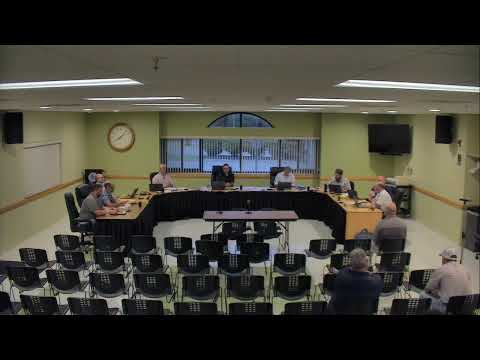
Chenango board weighs dozens of options as wastewater plant staffing and contract costs surge
Summary
Board members spent over an hour debating whether to recruit and train town operators or expand Camden Group’s contract after finding staff shortages and certification gaps at the wastewater plant; a six‑month contract alternative could raise near‑term costs by about $140,000–$150,000, officials said.
The Town Board of Chenango spent the bulk of its meeting debating how to keep the municipal wastewater treatment plant operating as shortages, certification hurdles and equipment problems strain existing crews. DPW operations manager Greg told the board the town currently supplements two full‑time contractor operators from Camden Group with three town employees, but staff are “burned out” and several lack the certifications or the time‑in‑service required to qualify for operator exams.
Greg presented three cost options: run the plant completely in‑house if certified staff could be hired (estimated at roughly $172,000 for a six‑month baseline in staff costs), continue the present hybrid model (green in staff materials), or contract Camden Group for full operations (a proposal that would cost the town roughly $246,000 for six months in the materials shown). He said Camden provides two full‑time operators and one as‑needed, and the town has been unable to attract certified operators at the wage steps allowed without union concurrence.
Board members repeatedly raised the union and civil‑service limitations that affect pay steps and whether offering a higher third‑year rate would be permissible without a grievance. “We’ve not had any luck with the first‑year rate,” Greg said, summarizing outreach to the union and the recruiting challenge. Members noted that training town employees would require months or years of supervised service under a licensed operator and that Camden Group would or could be asked to sign off on employees’ competency — a potential conflict because Camden would be training staff who could later replace them.
Contracting Camden for full operations would reduce overtime and immediately relieve on‑call burdens, but several board members cautioned it would also add roughly 40% to service costs in the near term. “We’re paying for professional service,” one member said, adding that long‑term savings could accrue if the town retained trained employees rather than paying subcontractors. The board and staff discussed rotating assignments, reassigning duties, and funding sources: some payroll lines could be shifted to Camden’s contract while other town salary lines would remain.
Engineers and DPW also briefed the board on construction‑era problems at the plant: a failed bar screen and long‑term rag accumulation mean tank 3 will require specialized dewatering and removal work. Estimates suggest tens of tons of solids may need hauling and disposal; Greg warned it is not feasible to simply pump the material through the current system because pumps clog frequently, and the work will likely require a contractor change order and an extension of the project schedule.
Board members directed staff to obtain a full change‑order package and a formal recommendation from the engineer and contractor before approving additional expenditures. They also instructed staff to prepare a budget analysis showing how a short‑term contract with Camden would be funded (including possible rate increases and use of existing payroll allocations), and to advertise available wastewater operator positions while evaluating contracting as an interim measure.
Next steps: the board asked Greg to produce a detailed funding plan and for the engineer/contractor to supply complete paperwork and cost estimates for any change orders related to the tank cleanup. The board signaled willingness to authorize limited emergency expenditures within the supervisor/manager authority if needed, but asked that items above that threshold be brought back for formal action.