Get Full Government Meeting Transcripts, Videos, & Alerts Forever!
Get email alerts on the Local Government topic
No spam. Unsubscribe anytime.
Dumont council adopts ordinance limiting flags on borough property after hours of public comment
Summary
The Dumont Borough Council adopted Ordinance 1646 on second reading after a multihour public-comment period. Supporters of the pride-flag raisings said the symbol supports vulnerable youth; backers of the ordinance cited liability and forum concerns. The vote recorded four in favor and two against.
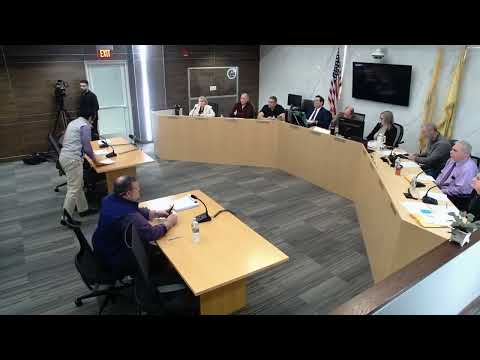
DUMONT, N.J. — The Dumont Borough Council voted to adopt Ordinance 1646, restricting which flags may be displayed on borough property, after a multi‑hour public‑comment session that brought more than 40 residents to the microphone.
The ordinance, adopted on second reading by a recorded roll call, narrows flag raisings on borough property to the American flag, the New Jersey flag and military flags required by law, and reserves to the governing body the authority to authorize other flag displays by resolution. The mayor announced the final vote as four in favor and two opposed; the council then moved to the remainder of the evening’s business.
Supporters of keeping the annual pride flag at Borough Hall argued the symbol provides a visible sign of inclusion and can save lives. "Raising the pride flag does not infringe on free speech — it is government expression that says to queer youth: you are seen," said Jeremy Lent, who identified himself as executive director of the Tene International Film Festival and recalled participating in Dumont’s 2021 pride‑raising. Multiple students, parents and teachers told the council that removing the flag would make some young residents feel unwelcome and at greater risk of depression or self‑harm.
Many speakers tied their remarks to local experience: "When that flag is hanging at Borough Hall it tells us we are welcome everywhere in this community," said one high‑school student. Teachers and school counselors described students who rely on visible signs of support; a number of speakers urged the council to reconsider the ordinance, saying the flag had been raised in Dumont for five years without prior problems.
Opponents of the pride‑flag requests and proponents of the ordinance argued they were acting to avoid legal exposure and to keep municipal property neutral. A speaker during public comment cited a 2022 U.S. Supreme Court decision involving Boston and warned that permitting private flag requests on government property can create a public forum that requires the municipality to accept all viewpoint‑based requests. "I'm recommending we limit our liability and simplify the process," that commenter said.
Councilwoman Petri, who delivered a prepared statement before public comment, framed the ordinance as aimed at unity and legal clarity. She said the change was not targeted at any single group and offered alternative ways the borough could support community events — for example, by providing an informational table inside Borough Hall or dedicating days at local parks and the electronic sign board to promote community events.
The meeting record shows the mayor told the council office had received 147 messages opposing the ordinance and five in support. Speakers on both sides referenced those numbers during the hearing.
What the ordinance does and next steps
Ordinance 1646 amends borough policy to restrict which flags may be raised on borough property and establishes a process that reserves the decision to the mayor and council rather than opening the flagpole to requests from outside groups. Council members noted the decision does not prevent private parties from holding rallies or parades elsewhere in town; several speakers called for stronger community outreach and events in public parks to ensure visibility for marginalized residents.
Council members and staff also said they would make room inside Borough Hall for displays and literature and discussed holding community events (residents suggested a June “rock‑the‑block” or parade) as a means to support LGBTQ residents without using the municipal flagpole.
Vote and record
The ordinance was adopted on second reading by roll call; the clerk read individual votes into the record and the mayor announced the result as four in favor and two opposed. The council did not record a mover or seconder for the final adoption in the public comment transcript; the council’s packet lists Ordinance 1646 as the item considered on second reading.
Public response and council context
The public comment portion focused overwhelmingly on concerns for LGBTQ youth and the symbolic value of the pride flag. Students and families described personal experiences of harassment and urged the council to retain the monthlong display in June; teachers and counselors described mental health concerns tied to visibility and inclusion. Speakers urging the ordinance emphasized legal caution and the need for the borough to avoid creating a situation that could require it to accept every viewpoint‑based flag request.
Several speakers asked about longer‑term remedies including a referendum or council‑led compromise language; council staff said the process to place a question on the ballot requires a voter petition or formal council action and would be subject to municipal procedures.
The council closed the meeting after additional general public comment and adjourned following housekeeping items.
The council packet and the official minutes will be the authoritative record of the ordinance language, the formal motion, and the full roll‑call tally.