Get Full Government Meeting Transcripts, Videos, & Alerts Forever!
Get email alerts on the Urban Enterprise Zone topic
No spam. Unsubscribe anytime.
Planner proposes shrinking Pemberton’s Urban Enterprise Zone to focus funds on business corridors
Summary
A CME Associates planner presented a draft five‑year strategic plan requiring the township to adopt a report before it can access UEZ grant funds; the plan recommends removing farms and Fort Dix parcels from the UEZ to concentrate funds on commercial areas and lists grantable projects from cameras to façade grants.
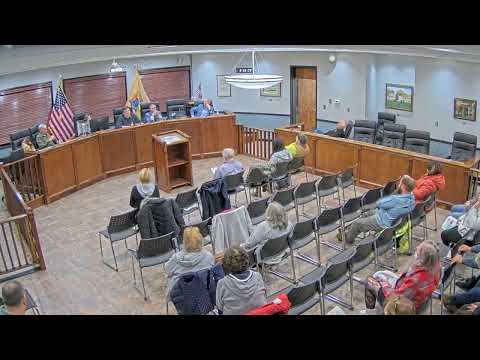
Chris dney, a planner with CME Associates, told the Pemberton Township Council on Feb. 19 that the state now requires every Urban Enterprise Zone (UEZ) to adopt a five‑year strategic plan to be eligible to receive and spend UEZ funds. dney said the program’s benefits include reduced sales tax rates for participating businesses and eligibility for state grants and tax credits, and that the state’s Department of Community Affairs (DCA) will review submitted plans.
The draft plan presented to the council outlines outreach findings and a long list of possible uses for UEZ funds, from public‑safety measures (security cameras, removal of blighted buildings) to business incentives (forgivable façade or capital‑improvement grants), streetscape and pedestrian improvements, marketing, and workforce training tied to local health and mental‑health employers.
A central recommendation would substantially shrink Pemberton’s UEZ boundaries so the program’s money is concentrated on existing commercial corridors such as downtown Browns Mills and Fort Dix Road. dney said the proposed redrawn boundary would remove most farms, forest tracts and Fort Dix parcels — shrinking the current zone to roughly one‑third of its size — and that parcel‑level lists and GIS files are included in the plan packet.
On funding, dney described the state allocation formula as based on three elements — the township’s non‑residential property revenues, the share of residents counted as low‑income, and actual sales‑tax revenues collected from participating businesses — and said the amount allocated to Pemberton changes each year. "I want to say it was somewhere in the range of several hundred thousand," he said, qualifying that as an estimate and not a precise figure.
Council members pressed for clarity about how grant awards would be vetted and who would approve them. dney said participating businesses would apply through an administrative process and that applications would typically require forms outlining the work and justification; staff could administer awards once the program’s procedures are approved, though council retains oversight and may adopt resolutions authorizing programs. He also said DCA will review any boundary changes and the township must adopt the report by resolution before applying for many kinds of UEZ funding.
Members of the public urged stronger outreach and questioned the plan’s cost. Marie Reynolds, a Browns Mills resident who participated in the plan’s survey, asked when the firm was retained and cited a contract in the $92,000–$95,000 range. She urged more substantive stakeholder engagement than a social‑media survey and pointed to low historic participation rates among local businesses.
The presentation closed with dney saying the council would need to adopt the plan by resolution and submit it to DCA; he warned that DCA may scrutinize parcel removals and that amending the plan later would require repeating public‑engagement steps.
The council did not vote on the plan at the Feb. 19 meeting; council members said they will review materials and return with questions before any formal adoption.