Get email alerts on the Lipsum Lot Split Withdrawal topic
No spam. Unsubscribe anytime.
Applicant withdraws lot‑split application after commission flags density and lot‑size issues
Summary
Richard Channing Lipsum withdrew his application to split a North 9th Street parcel after staff and commissioners said the proposed divided lots would fall below minimum lot size and violate density rules, requiring variances he opted not to pursue.
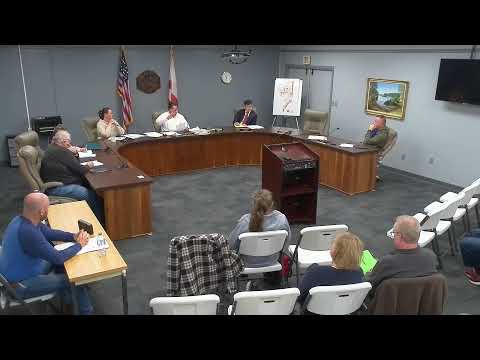
An applicant withdrew a proposed lot split after planning staff and commissioners concluded the division would likely violate Parker’s density and minimum-lot-size rules.
Richard Channing Lipsum described his plan to split a parcel on North 9th Street and build two houses. Staff calculated that dividing the parcel would produce lots of about 6,900 square feet each, below the 7,500-square-foot minimum for low-density residential districts and in tension with the commission’s density rules.
Staff warned the split would require two variances — for density and minimum lot size — and cautioned that approving the split could create "two unbuildable lots." After the discussion, Lipsum said on the record, "I officially withdraw my request for the lot," and the commission did not take a formal vote on that application.
Commissioners told the applicant that if he later showed the properties could be combined (for example, through ownership to the middle of a public-access alley) the variance might not be necessary, and they encouraged him to research deed and property-appraiser records before returning to the commission.
Next steps: the applicant may revise the proposal or return with documentation showing ownership or merger that would obviate the need for variances.
AI generated
The text on this page is AI generated. Summaries, highlights, analysis, and video transcripts are all produced from the original source material.
AI can make mistakes, so if you spot one, and we will fix it for everyone.
Note: the source content is unaltered by us. Any content source we link to, be it a video, an audio recording, or a document, is presented exactly as its publisher released it. That publisher is usually a government body, sometimes an individual official or another organisation.