Get Full Government Meeting Transcripts, Videos, & Alerts Forever!
Get email alerts on the Public Opinion topic
No spam. Unsubscribe anytime.
Annual Kern County survey finds stable life satisfaction but homelessness remains top concern
Summary
A county-commissioned survey of about 1,200 residents found overall satisfaction with quality of life at roughly 61.5% but flagged homelessness as the leading negative concern; transportation, housing preferences and public‑safety priorities also featured prominently.
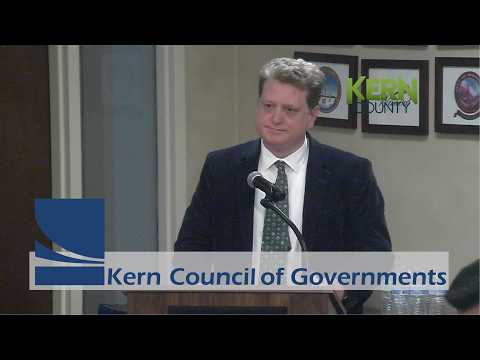
The Kern Council of Governments on Thursday heard results from its 2026 annual community survey showing steady overall life satisfaction alongside persistent concerns about homelessness and other service gaps.
Brian Godby of Gobby Research told the Council that the team completed 1,182 statistically valid interviews between late January and late February, with a margin of error of ±2.85%. "This survey we're at 61 and a half" for satisfaction with quality of life, Godby said, a rate near recent highs for the county.
The survey also asked residents to look ahead: the share that said the outlook for quality of life was positive registered about 32.5%. Respondents most often named the county's "small‑town atmosphere" (44%) as the feature they like best. But when asked what they like least, homelessness topped the list; Godby noted that homelessness has consistently been the leading negative response in recent years.
On priorities, respondents rated improving public education, preserving water supply, maintaining local streets and roads, improving water quality, creating higher‑paying jobs and strengthening crime and gang prevention among the most important issues for future quality of life. "Improving the quality of public education" scored highest on the intensity scale used in the survey, Godby said.
Transportation responses reflected questionnaire changes introduced this year: drive‑alone trips were lower on one slide (67.3%), but Godby cautioned that separating hybrid and electric vehicles into their own categories raises the combined drive‑alone share back toward previous levels (about 76% when EVs and hybrids are included). Telecommuting participation and weekly commute distances also featured in the presentation; about 55% of respondents reported weekly commute distances that imply 20 miles or less round trip per day.
On freight and local economic impacts, the survey found mixed views of new warehouse development: the largest plurality (about 44%) said recent warehouse facilities generated jobs and tax revenues and were generally a benefit to Kern County; smaller shares characterized them primarily as a traffic or safety cost. A consistent plurality also supports higher registration fees for commercial trucks to offset road‑repair costs.
Board members thanked staff and the consultant for the report and asked follow-up questions. The presentation concluded with an offer for Council members to receive the full data and methodology materials.
The Council did not take action on the survey itself; the presentation was informational and intended to guide future planning and outreach.