Get Full Government Meeting Transcripts, Videos, & Alerts Forever!
Get email alerts on the Transportation topic
No spam. Unsubscribe anytime.
Board to reassess Highland speed humps before adding traffic calming on Taylor Avenue
Summary
After staff presented Taylor Avenue traffic counts showing an 85th‑percentile speed about seven mph over the limit, supervisors agreed to wait until Highland's new speed humps are installed and behavior is reassessed (post‑Labor Day) before deciding on Taylor; they discussed using in‑house or consultant traffic counts.
The Board reviewed traffic‑calming options after staff presented the Taylor Avenue speed study, which recorded an 85th‑percentile speed 'seven miles over the ... speed limit.' Engineering staff said consultants typically use an eight‑mph threshold for considering speed humps, and the packet contained two conceptual designs for Taylor.
Multiple supervisors said they preferred to wait and measure the effect of the Highland Avenue speed humps once installed. One supervisor said, 'I want to see how the speed bumps on Highland Avenue pave out and work out before putting new speed bumps on Taylor,' and recommended a follow‑up survey after people have had time to change driving behavior (suggested timing: post‑Labor Day, end of September).
Board members debated whether to run the follow‑up counts in‑house or hire the consultant (Imperial) that completed the May study; concerns centered on consistency between measurement methods. Staff said an in‑house study could be done but offered to coordinate with Imperial to match measurement locations if the Board wanted consultant comparability.
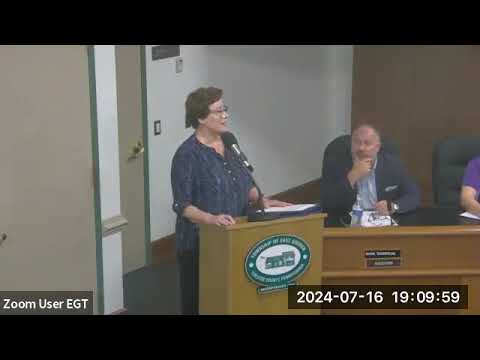
A resident, Carl, spoke during public comment, arguing Taylor differs from Highland and urging careful placement if a device is used: 'I don't see the point because it's a different stretch of road ... there's a huge gap where the stop sign ... something needs to interrupt them with the speed there in the middle.' The Board agreed to schedule follow‑up data collection and to revisit the need for a ballot measure if warranted by results.
No binding policy or expenditure was approved at the meeting; supervisors directed staff to schedule further data collection and to return with analysis.