Get Full Government Meeting Transcripts, Videos, & Alerts Forever!
Get email alerts on the Historic District Nomination topic
No spam. Unsubscribe anytime.
State preservation officials outline proposed New Albany historic district as residents press questions on sales, insurance and tax credits
Summary
Mississippi Department of Archives and History staff presented a nomination to create a larger New Albany historic district (about 994 resources, 733 contributing) and explained benefits such as Section 106 review and potential tax credits; residents asked how listing affects sales, insurance, building rules, and how to submit objections before the July 18, 2024 review board hearing.
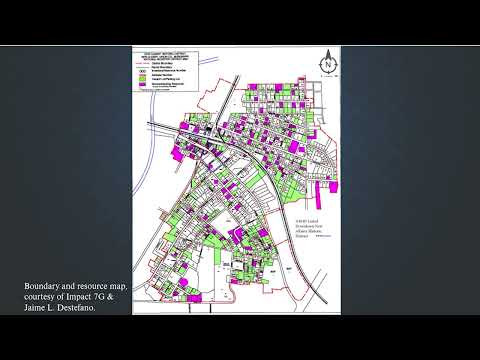
Thomas Dav, a representative of the Mississippi Department of Archives and History, presented a nomination and resurvey proposing to expand New Albany’s National Register of Historic Places coverage to include downtown and adjacent north and south neighborhoods. He said the proposed boundary encompasses roughly 994 resources, of which 733 are identified as contributing, with a period of significance from about 1870 to 1975.
The nomination, funded through a state grant and completed in two survey phases, will be considered by the Mississippi National Register Review Board on July 18, 2024; if the board approves it, the nomination will be forwarded to the National Park Service for a final decision, Dav said. "This is the culmination of it," he told the public as he described the survey work and the next procedural steps.
Why it matters: Dav said National Register listing documents local history, can trigger Section 106 review for federally funded projects (which requires federal agencies to consider effects on historic properties), and can make properties eligible to apply for state and federal rehabilitation tax incentives. He emphasized that most National Register listings are of local or state significance and that the program aims to preserve a tangible thread that links commercial, residential and governmental buildings across the city.
During an extended question‑and‑answer period, residents pressed officials about how listing would affect private property. A resident asked whether listing affects sales; Dav replied directly: "National register listing does not affect sales." On insurance he said: "listing has nothing to do with insurance." He reiterated that the National Register is an honorary federal designation and that any property requirements would come from local ordinances, not from the National Register.
Objections and owner rights: Dav described the objection process for district nominations: "If a majority of property owners objects to the proposed District then the nomination won't be considered." He advised owners who wish to object to submit signed, notarized statements ahead of the July 18 review board meeting. He also offered digital copies of the nomination and the full inventory so owners can see whether individual properties are listed as contributing or non‑contributing.
Integrity and rehabilitation: Officials explained how material changes affect contributing status. Dav said original exterior materials — for example, original wood siding or original windows — are character‑defining features; replacement siding or windows can lead a building to be classified as non‑contributing in the nomination. He directed tax‑credit and technical rehabilitation questions to the state landmarks/tax incentives coordinator (listed in meeting materials) for owners seeking detailed guidance.
Local vs. national regulation: Multiple attendees asked whether the National Register listing would impose local building rules. Dav clarified that the National Register does not by itself create enforceable local ordinances: local historic district ordinances are adopted at the city level and would be the source of binding requirements. However, he added, if the city later sought a local historic district with ordinance controls, property owners would be governed by those local rules.
Next steps and outreach: Dav encouraged residents to take business cards or request digital files of the nomination and inventory. He said surveyors worked from the public right of way and that public meetings and outreach had accompanied the two survey phases; attendees who want to object to the nomination should submit objections in the form outlined before the July 18 review board.
The meeting closed after roughly an hour of presentation and questions; the nomination remains pending review by the Mississippi board on July 18, 2024, and then by the National Park Service if approved at the state level.