Get Full Government Meeting Transcripts, Videos, & Alerts Forever!
Get email alerts on the Parking Management topic
No spam. Unsubscribe anytime.
Evanston committee asks staff to survey businesses as parking review continues
Summary
The Evanston Economic Development Committee heard a consultant overview on demand-based parking, public comments from business owners urging targeted outreach, and directed staff to survey businesses and compile existing data to inform pilot options such as demand pricing and parking-benefit districts ahead of the fall budget season.
The Evanston Economic Development Committee on May 27 directed staff to survey local businesses and compile existing parking data as it continues a multi-month review of parking policy and curb management.
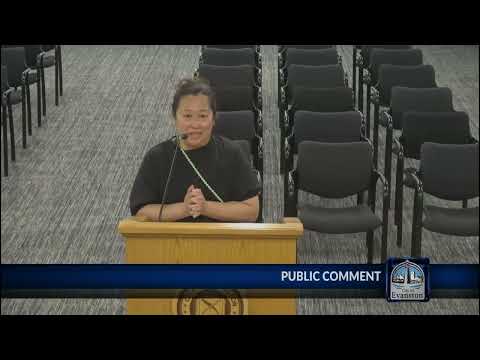
At the meeting, the committee heard public comments from small-business owners who said current metering and short time limits create friction for customers and employees. “Free or reduced parking would be poor economic policy, poor environmental policy, and a regressive and inequitable policy,” said Robert Keating, communications chair of the Evanston Transit Alliance, urging investment in walking, biking and transit instead of subsidized street parking.
The committee then received a roughly hour-long presentation from Lindsay Bailey of Walker Consultants, who urged a data-driven, district-by-district approach and described three core principles: optimize price to target roughly 15% availability, return meter revenue to local improvements through parking-benefit districts, and eliminate rigid parking mandates so supply can adapt. “If you get the price right, it will be the lowest price that creates that 15% availability,” Bailey told members, illustrating demand-based pricing and curb-management tools used in other cities.
Members and business-district directors pressed for practical details. Kelly Mack, a Central Street business owner, said outreach to the broader business community has been insufficient and urged the committee to move from conversation to action. “Survey outreach has been requested and has not been completed,” she said.
Committee members raised operational and equity questions: how to accommodate evening theater and restaurant demand in some districts, how to make payment technology accessible to non-tech users, and how to manage employee parking so staff are not continually feeding meters. Several members suggested low-cost or subsidized employee permits, garage permits, shuttles from remote lots, and progressive pricing that makes long-stay parking increasingly costly.
Staff said some data sources are available immediately—municipal garage counts, the city’s parking app logs, and third-party datasets such as Placer.ai—and recommended a mix of short-term field observations, a business survey, and targeted town halls. Economic development manager Paul Zamac told the committee staff capacity is limited and that work will rely on the city parking team and possible university or intern partnerships.
Procedural actions at the meeting included approval of the April 22 minutes (moved by Council Member Matt Rogers and seconded by Committee Member Lisa Deacon; Beckman abstained) and a motion to allow Council Member Suffford to participate remotely, which carried.
Next steps: the committee asked staff to draft and distribute a business survey, compile existing app and garage data, and return with findings and recommended pilot options for further committee review leading into the fall budget process. The committee did not adopt any pricing or enforcement changes at the meeting; it tasked staff to gather the data and stakeholder feedback needed to evaluate pilots and potential parking-benefit district proposals.
The meeting adjourned at 6:32 p.m.