Get Full Government Meeting Transcripts, Videos, & Alerts Forever!
Get email alerts on the Council Procedure topic
No spam. Unsubscribe anytime.
Governance committee orders rewrite of Santa Clara council reconsideration policy after debate over who may reopen votes
Summary
Santa Clara’s Governance & Ethics Committee directed staff to redraft Council Policy 042 to clarify who may request versus who may move a reconsideration, how to define the “prevailing party,” and when new evidence or a change of mind justifies reopening a decision; the motion passed unanimously.
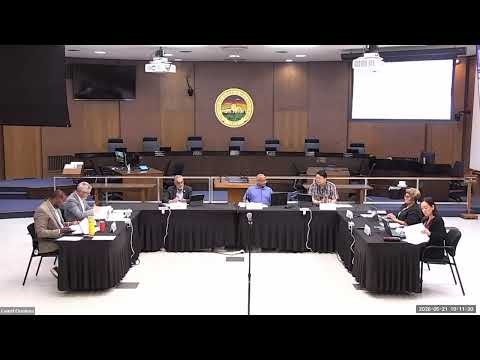
The Governance & Ethics Committee unanimously directed staff on March 21 to rewrite Council Policy 042, the city’s rule for requesting and moving to reconsider council actions, after an extended debate about who may force or initiate reconsideration and what counts as new evidence.
Committee members, the city attorney and the city manager discussed multiple sticking points in the policy, including whether any member of the public can force a council vote on reconsideration, whether the presiding officer can call for such a vote, and whether reconsideration should be limited to genuinely new evidence or allow votes based on a council member’s change of mind. The city attorney summarized the existing policy’s intent: “A request for reconsideration may be made by any person,” while noting that “a motion to reconsider an action taken by the city council can be made only by a council member when we’re talking about council members who voted on the prevailing side.”
The debate focused most heavily on the definition of the “prevailing party” — the label that determines who on the council can make a motion to reopen a matter. Committee member Chahal cited parliamentary authorities and urged clarity, summarizing common practice: in many contexts “the prevailing party is the one whose motion passed.” Other members argued for nuance where different vote thresholds or procedural contexts (for example, quasi‑judicial permit hearings versus internal administrative decisions) might justify different treatment.
City Manager comment emphasized operational timeliness: “If the policy is defined as the prevailing party … it should be agendaized for the vote to reconsider, not agendaizing a vote to determine whether you reconsider,” noting that a two‑step process (a vote to add a reconsideration to a future agenda, then a later substantive vote) can introduce month‑long delays for time‑sensitive matters.
Several members pressed that presence and participation should matter: an absent or abstaining member generally should not be treated as if they were part of a prevailing side. Members also discussed bundling and bifurcation of staff recommendations after an example where combined recommendations required different vote thresholds and produced confusion about which parts, if any, were approved.
After discussion, Committee member Park moved — and a colleague seconded — a motion asking the city attorney to revise Policy 042 to: define “prevailing party” consistent with a clear table of outcomes (pass vs. fail vs. threshold requirements); clarify that anyone (including members of the public) may request reconsideration but a motion to reconsider may only be made by a council member on the prevailing side; specify how a reconsideration is to be agendaized (single‑step action unless another approach is requested or justified); and retain existing procedural language unless staff can demonstrate redundancy. The committee voted unanimously to send the redraft back to staff for return to the committee for further consideration.
The city attorney said staff will propose language addressing special circumstances (for example, when an applicant’s due process interests apply), explain how the Brown Act affects agenda timing, and offer examples and a table of prevailing‑party scenarios for clearer application. The committee directed staff to preserve notice and due‑process protections for interested parties when reconsiderations are scheduled.
The committee also heard a brief public comment urging an on‑screen agenda ticker for council video streams so viewers can more easily find items, and additional discussion about scheduling special meetings and decoupling bundled agenda recommendations. The committee deferred the next agenda item and adjourned after the vote.