Get Full Government Meeting Transcripts, Videos, & Alerts Forever!
Get email alerts on the Cdbg Public Service Funding topic
No spam. Unsubscribe anytime.
Community Development Commission hears six applicants seeking 2026 CDBG public‑service funds; requests exceed available cap
Summary
At a regular meeting the Community Development Commission heard presentations from six nonprofits requesting a combined $340,000 in 2026 CDBG public‑service funds; staff estimated the 15% public‑service cap at about $155,000 and asked commissioners to score applications ahead of a March 16 meeting to form funding recommendations for City Council.
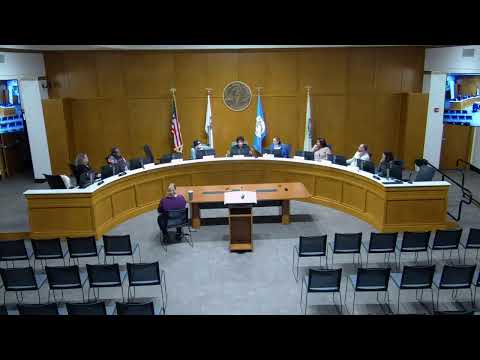
The Rock Island Community Development Commission spent its meeting hearing six nonprofit presentations from organizations applying for 2026 Community Development Block Grant (CDBG) public‑service funds and setting a timeline for scoring and recommendations.
The applicants requested a total of about $340,000 for services ranging from legal assistance to youth programming, while staff estimated the public‑service funding cap at roughly $155,000 pending HUD’s allocation. Commissioners were asked to complete a scoring sheet for each applicant and return to the commission’s next meeting for discussion and a recommendation to City Council.
Prairie State Legal Services asked for $50,000 to provide civil legal services to low‑ and moderate‑income Rock Island residents. Joining remotely from out of state, the presenter said the local Moline office represented 1,023 individual clients in 2023–24 and handled more than 1,600 cases across multiple counties. "When tenants have representation in eviction cases, they are significantly more likely to remain housed or secure more favorable outcomes," the Prairie State presenter said, arguing that legal representation prevents homelessness and reduces strain on emergency services.
The Martin Luther King Center requested $150,000 to expand its after‑school and summer day‑camp programs serving children ages 5–17 (after school) and 5–14 (summer). Director Jerry Jones emphasized the center’s long history with CDBG funding and cited local education indicators: five of the city’s 13 schools were identified as underperforming and nearly 18% of young people ages 16–24 in parts of the West End were considered "disconnected." Jones said the program provides homework help, transportation, meals and structured enrichment to reduce dropout risk.
Narratives QC, led by Dr. Annette Clevenger, requested $25,000 to support services for young adults aged roughly 17–29, including life coaching, mental‑health supports and a workforce development pilot tied to a coffee‑shop training site. Clevenger said the group served 132 people last year and that the 35 participants funded with prior CDBG dollars met at least one of their self‑set goals.
Christian Care requested $40,000 to support its emergency shelters, community meal site and street outreach. Operations manager Cindy Gman said Christian Care operates a 42‑bed men’s shelter (with six beds set aside for veterans and six set aside for drug/mental‑health court referrals) and a women’s shelter, and that the organization provided nearly 46,000 meals in 2025. Gman described a funding mix that includes a VA grant for veterans services, Emergency Solutions Grant dollars, local grants and charitable contributions.
Spring Forward Learning Center requested $25,000 to continue academic tutoring and enrichment designed to accelerate students toward grade‑level proficiency. Executive Director Robert McIntyre said the organization serves more than 1,100 students annually across multiple districts and that the after‑school project budget is about $129,987.
The YWCA Quad Cities Empowerment Center requested $50,000 to fund a case‑manager position to provide wraparound navigation for clients using the food pantry, showers, laundry and other basic needs services. Director Amy Schaefer said the center saw substantial growth in demand — reporting thousands of documented visits last year and 252 unduplicated Rock Island County individuals in January alone — and said a dedicated case manager would help connect people to longer‑term services.
Staff summarized the administrative timeline: the federal CDBG allocation was expected to be announced by April 4; the public‑service cap is limited to 15% of the annual allocation (the staff estimate for 2026 was approximately $155,000); commissioners were asked to score all six applications using the packet matrix before the March 16 meeting; and the commission will form a recommendation for City Council, which has final approval before staff submits the annual action plan to HUD. Staff also cautioned commissioners against emailing score sheets to the full group to avoid Open Meetings Act violations.
The commission also approved the draft minutes from Jan. 20, 2026, by voice vote earlier in the meeting and adjourned after a recorded motion from Commissioner Jeremy Craftton. The commission is scheduled to reconvene for scoring and recommendation discussions at its next meeting.