Get Full Government Meeting Transcripts, Videos, & Alerts Forever!
Get email alerts on the Sheriff Budget topic
No spam. Unsubscribe anytime.
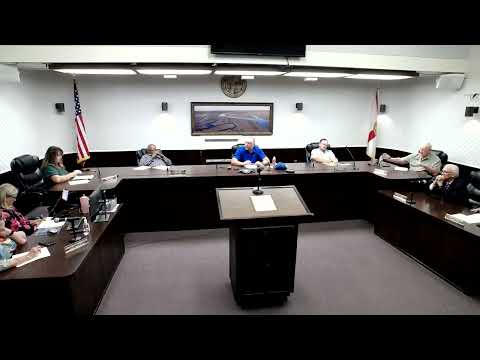
Taylor County commissioners approve $700,000 to restore sheriff’s budget after state appeal
Summary
On May 26, 2026 the Taylor County Board of County Commissioners voted 4–1 to restore $500,000 from general-fund reserves and $200,000 from one-cent capital funds to the sheriff’s budget after a state hearing panel asked the parties to negotiate locally; commissioners warned about long-term pressure on reserves.
Taylor County commissioners voted 4–1 on May 26, 2026 to restore $700,000 to the sheriff’s office budget after the sheriff appealed a prior county reduction and a state hearing panel asked both sides to work toward a compromise.
The board approved $500,000 from the county general-fund reserves and $200,000 from one-cent sales-tax capital money to bring the sheriff’s budget closer to the amount requested for the coming year. Commissioner Peele cast the sole No vote; Commissioners Dims, English, Newman and Moody voted Yes.
The action follows a year in which the board reduced constitutional-officer budgets amid an estimated $2 million revenue loss tied to mill closures and three hurricanes. Commissioners said they sought cuts to avoid raising property taxes or depleting reserves; the sheriff appealed a roughly $200,000 reduction and sought additional funding that the board had declined during last year’s budget process.
Why it mattered: County officials told a state panel they were confronting a substantial local revenue shortfall and had already achieved savings through competitive health-insurance bidding and other reductions. The panel asked the sheriff and the board to meet locally to try to resolve the dispute rather than leave the issue to state review. County leaders said they were responding to that request when they convened the May 26 meeting.
Sheriff’s staffing and safety concerns: County officials and the sheriff’s office described staffing shortfalls at the jail and in patrol. The meeting record shows six vacancies in the jail and a recent in-custody death that county speakers linked to supervision and staffing levels. The under sheriff, Marty, responded to commissioners’ procedural questions about how funds would be used and whether capital-designated dollars could be repurposed for operations: "No, we're going to have some equipment needs that we have to have to do, too," Marty said, noting that capital requests must be itemized even if statutory changes permit some intra-budget transfers.
The funding package and prior spending: Commissioners discussed prior emergency vehicle spending, noting the county already provided about $83,000 for two vehicles. Under the approved motion, the combined restoration plus earlier vehicle funds will bring additional resources for the sheriff’s office near the levels discussed at the appeal. The motion was offered by Commissioner Newman and seconded by Commissioner Moody.
Fiscal risk and reserves: Several commissioners urged caution about using nonrecurring reserves for recurring expenditures. County staff noted that moving $500,000 from reserves would leave approximately $212,000 covered with nonrecurring revenue in the current budget year; that sum may need replacement in the next budget cycle if no new recurring revenues appear. The clerk reported roughly $12 million in reserves but other speakers noted an estimated $5 million in recent hurricane-related expenditures that might be reimbursed or otherwise affect net available funds.
Process and next steps: Staff confirmed the sheriff's office will file the results of the board’s decision with the budget hearing panel or the Office of Policy and Budget (OPB) the next business day to close the appeal pathway at the state level. Commissioners discussed alternative funding paths — splitting the amount between reserves and the one-cent capital fund — and agreed to that split to avoid additional trips to Tallahassee.
What was not decided: Commissioners repeatedly stressed that the approved funding does not guarantee long-term recurring funding. Multiple members said they would not support ongoing increases funded from reserves and that future budgets will need to address how to sustain staffing or operating costs without draining nonrecurring balances.
The vote and immediate outcome: A motion by Commissioner Newman to allocate $500,000 from the general fund reserves and $200,000 from the one-cent capital fund passed 4–1 (Peele No; Dims, English, Newman, Moody Yes). The board recorded the roll call and instructed staff to notify the state panel.
The meeting adjourned after a brief public-comment clarification about filing the board’s action with state officials.