Get Full Government Meeting Transcripts, Videos, & Alerts Forever!
Get email alerts on the Board Orientation topic
No spam. Unsubscribe anytime.
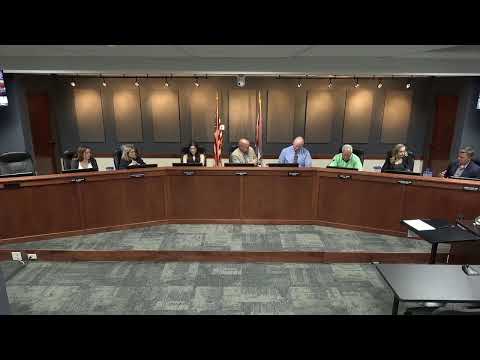
Town attorney briefs Berthoud trustees on roles, open‑meeting rules, quasi‑judicial hearings and ethics
Summary
Town Attorney Katherine Sellers gave an extended orientation to the newly constituted Board of Trustees covering board duties, Colorado governmental immunity, open‑meetings and records rules, quasi‑judicial hearing procedures, conflict‑of‑interest and gifts guidance, and recommended practices to avoid legal risks.
Town Attorney Katherine Sellers delivered a comprehensive orientation to the Town of Berthoud Board of Trustees on April 21 that walked through trustees’ legal responsibilities and routine practices meant to reduce liability and preserve public trust.
Sellers opened by underlining the attorney’s role: “We support the board and provide you legal advice. We are not makers, we are not decision makers,” and told trustees the training would focus on recurring legal hazards and practical governance norms.
She summarized the board’s statutory role: the Board of Trustees holds the town’s legislative and corporate authority and is responsible for policy, budgeting and, in some cases, quasi‑judicial decisions such as land‑use applications. Sellers emphasized the board acts collectively by majority vote: members should voice dissent during meetings but avoid taking actions outside the board’s public process that could create liability.
Sellers reviewed Colorado’s Governmental Immunity Act (GIA), noting that immunity protects local governments in many daily operations but is waived for certain activities (for example, dangerous conditions and operation of motor vehicles or water facilities) and can be lost for willful or wanton acts. She warned members that discrimination, inappropriate personal relationships or acting outside one’s authority can put trustees at risk of personal liability: “If you stay in your lane … chances are immunity is going to apply,” she said, adding that losing immunity can expose a trustee to judgments and loss of insurer coverage.
On transparency, Sellers explained Colorado’s open‑meetings law (the “sunshine” law) and the Colorado Open Records Act (CORA). She reminded trustees that a quorum (three for this body) discussing public business—whether in person, by email, text or social media—can constitute a meeting requiring notice and that meeting agendas must provide timely (statutory 24‑hour) and sufficient detail. She recommended forwarding constituency emails and other public submissions to staff (copying the board) so responses are recorded and consistent.
Quasi‑judicial proceedings and ex parte communications were a major emphasis. Sellers described quasi‑judicial items as decisions that apply pre‑existing criteria to the facts developed at a public hearing. She instructed trustees to base rulings solely on the hearing record (staff reports, applicant testimony, public comment and board questions), to avoid independent research or site solicitations that could amount to ex parte contact, and to disclose and recuse where necessary. “If you continue a hearing or recess, don’t talk to the public about the application,” she warned, adding that inadvertent contacts should be disclosed on the record and that recusal may be required in some circumstances.
Sellers offered practical rules for hearings and motions: prepare questions in advance, consider drafting complex motions in writing before reading them aloud, and take care when proposing conditions during a hearing—conditions should be designed to bring an application into compliance with code criteria, not inserted as unrelated bargaining points.
She also covered conflicts of interest and ethics: trustees must disclose any personal or financial interest that could affect a vote, step aside from the decision when appropriate, and avoid appearances of impropriety. On gifts, Sellers noted the Independent Ethics Commission gift threshold (recently cited as $75) and described exceptions such as campaign contributions, reimbursements for speaking engagements and gifts from personal friends on special occasions. She advised trustees to pay for their own tickets to events sponsored by individuals or entities with business before the board unless the town or another neutral party has provided the sponsorship.
Sellers closed by offering follow‑up materials: staff will distribute a written memo and a SharePoint folder with resources including the town’s packet materials, CML and CERSA guidance, and sample checklists for hearings and motions. She repeatedly encouraged trustees to call the town attorney’s office ahead of meetings with questions.
The orientation covered common governance pitfalls and recommended concrete, record‑oriented practices designed to reduce litigation risk and maintain public confidence. The session included extended trustee Q&A on ex parte conduct, petition signing, public comment procedures, and handling constituent emails.