Get Full Government Meeting Transcripts, Videos, & Alerts Forever!
Get email alerts on the Budget Projections topic
No spam. Unsubscribe anytime.
Budget committee warns of long‑term budget pressure, urges expense restraint and studies for stormwater fund
Summary
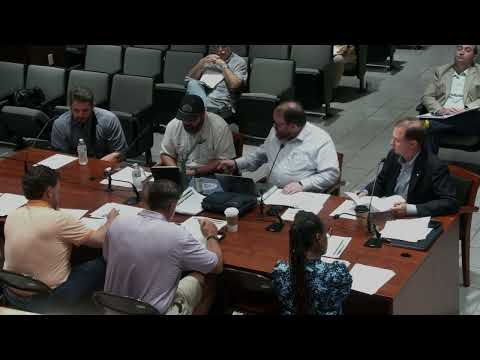
A Jackson City budget committee presentation warned that compounding step raises and unchecked expense growth could deplete the general fund within years, and urged expenditure restraint and consideration of a stormwater enterprise fund and realistic capital planning.
Paul, presenting a multi‑year budget model to the Jackson City budget committee, warned that compounding step raises and continued expense growth risk exhausting the general fund within a few years. "Expense control is the name of the game here," Paul said, urging the committee and city council to pursue both restraint and targeted revenue strategies.
Paul told members the proposal to grant 2.5% step raises this year would cost about $1.42 million. He said the compounding effect of similar raises over several years could add roughly $22 million in additional expenses over five years unless spending growth is controlled. "If we don't control expense growth, nothing else matters," Paul said, showing projections that under unchecked spending the general fund could be depleted in about four years.
The committee discussed two main levers to change that trajectory: strict expenditure restraint and structural revenue changes. Members discussed targeting annual operating‑expense growth in the low single digits (a 3% illustrative restraint was discussed) and creating an enterprise fund for stormwater so that revenues and spending would be ring‑fenced for that service. "When I say enterprise fund, that's what is set up much like the way we have waste management — it has to be that way," a vice mayor said, noting stormwater revenues should only be spent on stormwater activities.
The group also reviewed the city's capital capacity and borrowing assumptions. Paul said the city's realistic general obligation bond capacity under current policy is roughly $25 million, and cautioned that large items such as a previously discussed public safety complex (cited at $167 million in earlier planning) are unlikely to be fundable at that scale without different financing approaches. He suggested options such as capital outlay notes or leases for some projects.
Committee members urged clearer goals from the full city council so the budget committee can run scenario analyses that align with council priorities. Council members present said they want the committee to provide forecasting and trade‑off scenarios before council votes on policy choices. Paul agreed to share his model and run additional scenarios in a work session.
Next steps: the committee will present projections and scenario runs to the council in members' requested work sessions and continue evaluating enterprise fund structure and timing once the CIP/study for stormwater is complete.