Get Full Government Meeting Transcripts, Videos, & Alerts Forever!
Get email alerts on the Rail Crossings topic
No spam. Unsubscribe anytime.
Regional rail-crossings study ranks Main/14th among top two; BNSF agreed to fund local match, presenters say
Summary
HDR and Metro COG presented a regional rail crossings study to the Dilworth City Council that ranks a Main Street/14th Street grade separation among the top two projects, with BNSF providing the required local match; presenters framed the work as an early-stage planning study focused on alternatives, costs and emergency-access benefits.
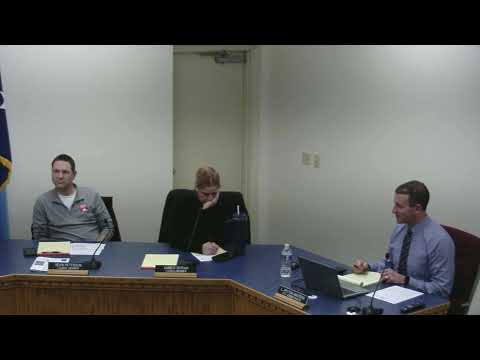
HDR project manager Dan Bergeson and Metro COG planner Ben Griffin presented a Fargo–Moorhead metro rail crossings study to the Dilworth City Council, saying the study evaluated 15 locations across the metro and ranked the Main Street/14th Street grade separation among the top two regional priorities.
Griffin said the study began more than three years ago after BNSF contacted jurisdictions in the region and agreed to provide the local match for federal funding. "BNSF also agreed to provide the local match for the study," Griffin said, noting that arrangement relieved local jurisdictions of the 20% local match requirement.
Bergeson described the study’s scope and alternatives. He said two Dilworth locations were included (34th Street and Main/14th) and outlined options: a below‑grade connection at 34th and a grade separation that would close the Main Street crossing and add an overpass at 14th. "I'll remind everyone it's a planning study," Bergeson said. "This is step number 1 in any sort of project that would or could transpire — a high‑level look at what it would take."
Presenters said the study used weighted criteria and a benefit‑cost analysis; emergency‑service access and project benefit magnitude were among the highest weighted factors. Bergeson said eliminating at‑grade crossings and gaining railroad support pushed Main/14th to a top ranking: "Anytime an at‑grade crossing could be eliminated, the railroad is in full support."
Council members asked about the scoring and railroad priorities. Council member Steichen observed that BNSF’s preferences carry substantial weight; Bergeson and Griffin said the railroad support category was one of several scoring criteria used by the study’s stakeholder and review committees.
The presentation noted constraints and next steps: property and drainage challenges near 34th, right‑of‑way and elevation concerns for an overpass at 14th, and coordination with MnDOT and regional partners. No formal action on construction was proposed; the council received the study and asked staff and Metro COG to continue coordination.
What happens next: the study positions specific crossings for future, more detailed engineering and funding applications; any project would require design, funding, railroad agreements and additional environmental and right‑of‑way work.