Get Full Government Meeting Transcripts, Videos, & Alerts Forever!
Get email alerts on the Short Term Rentals topic
No spam. Unsubscribe anytime.
Residents urge stricter short-term-rental rules as draft '2045' zoning plan advances
Summary
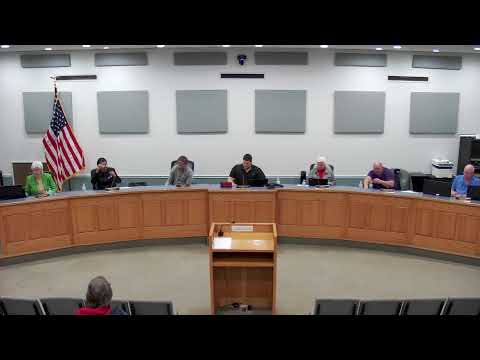
At the Feb. 3 Bay St. Louis council meeting, multiple residents raised enforcement and preservation concerns about short-term rentals, saying the draft 2045 zoning ordinance omits existing short-term rental rules and that planning and police are investigating listings cited by neighbors.
Residents pressed Bay St. Louis city leaders on Feb. 3 to tighten and enforce short-term rental rules as the council reviews a draft zoning plan they said threatens low-density neighborhood character.
Phil Seight told the council it should not approve any version of the draft Bay St. Louis '2045' zoning ordinance unless it includes “a new more strict short-term rental ordinance,” arguing that the city currently has “the least restrictive short-term rental ordinance of any city on the Mississippi Gulf Coast and is not enforced.” He said the draft fails to reference the existing ordinance (he cited “ordinance 66908 2024”) and warned that increasing rental density damages historic neighborhoods.
The comments were echoed by neighbors who identified specific addresses and listings. John Benton said he had found Airbnb listings for adjacent properties and that one listing “claims they sleep 13 people,” and described nearby houses with multiple bedrooms and high potential occupancy. He said he has emailed city staff and asked who enforces the rules; staff responded that planning and police have investigated listings, that enforcement can proceed to city court, and that neighbors should document listings and parking violations to build prosecutable files.
Planning staff and police representatives told the council they are tracking suspected short-term-rental listings, reaching out to operators, and preparing records for possible citations. Staff noted that if an operator accumulates multiple infractions the city can pursue permit revocation or court action, but they also acknowledged the difficulty of locating listings that are mislocated or deliberately obscure on hosting platforms.
The exchange highlighted two overlapping issues for council members: how to revise the draft zoning ordinance so its code and implementation protect neighborhood character, and how to strengthen on-the-ground enforcement so violations lead to citations and prosecution. Several residents, including speakers who described their neighborhoods as low-density R1, urged the council to ensure enforcement is part of any zoning rewrite.
The council did not take formal action on a zoning change at the meeting; multiple speakers asked staff to continue investigation and documentation so enforcement could move through the planning office and city court if needed.