Get Full Government Meeting Transcripts, Videos, & Alerts Forever!
Get email alerts on the Home Rule topic
No spam. Unsubscribe anytime.
Pekin officials warn repealing home rule could cut about $8 million and force steep service cuts
Summary
City officials at a Pekin town hall told residents that losing home-rule authority would immediately remove roughly $8 million in annual local revenue—about 20% of recurring general-fund receipts—and could force deep cuts to public safety, infrastructure and services or large property-tax increases; staff answered resident questions on code enforcement, referendum rules and local policing.
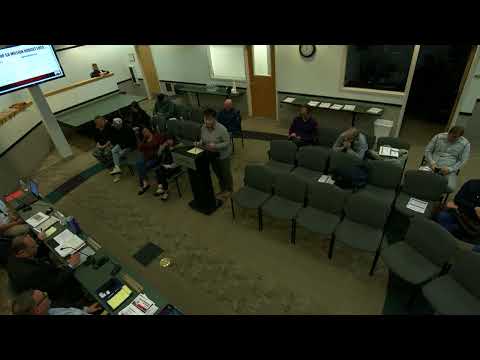
City Manager John Dossi and other Pekin officials told a packed town-hall audience that repealing the city's home-rule status would remove roughly $8 million a year in locally available revenue and sharply limit the council’s flexibility to fund police, fire and daily services.
"The purpose of this meeting tonight is one of many town halls…to talk about home rule and what it does and doesn't do for the city of Pekin," Dossi said as he introduced the executive team and described the session format. Attorney Jim Velli and Finance Director Eric Dubrowski led a slide presentation detailing legal bases and the fiscal consequences of losing home-rule powers.
"It's about $8 million per year. It's roughly 20% of our annually recurring general fund revenue," Dubrowski said, explaining that those dollars come from local sales taxes and portions of motor-fuel, liquor and hotel taxes. He warned that the loss of those revenues would be immediate: "When you're in those type of situations, you have options. One is on the expense side…you can't do a one-time cut for something like that." Officials said a complete loss of the $8 million would require either sweeping program cuts or large increases in property taxes to replace the revenue.
Velli reviewed the legal basis for home rule, noting the authority flows from the Illinois Constitution and related case law and that municipalities that reached 25,000 population automatically gained home-rule status. He also read excerpts from an Illinois Municipal League study and cited Rockford as an example the city uses to show that repealed home rule has not historically produced lower property taxes in some jurisdictions.
Officials addressed how home rule affects local control on development, permitting and law enforcement ordinances. Staff said some local ordinances—such as the city's no-camping rules and a ban on gas-powered “DUI” bikes—were possible or simpler to implement with home-rule authority, while minimum state building and plumbing codes would still apply under either status.
A speaker who identified himself as a former police chief described practical enforcement limits under state law, particularly around homeless encampments, and said partnerships with social-service providers and the Salvation Army helped the city address encampments without forcible removals. The city emphasized that ordinary code enforcement and permitting would not disappear without home rule, but staff acknowledged process and transparency concerns raised by residents and promised a separate town hall focused on code enforcement.
Residents pressed officials about whether a favorable referendum on repeal would be binding. Staff said they would prepare a research memorandum clarifying the referendum mechanics and noted, historically, most repeal referenda fail. Resident Matthew Johnson urged caution in citing old votes, saying, "I was nine years old back then. I didn't vote," to underline demographic turnover since Pekin's 1987 referendum.
Officials closed by inviting written follow-ups and scheduling another town hall tentatively for Dec. 10. "If you have questions, email them to Paige," Dossi said, and staff committed to post answers publicly and return with clarifying legal research.
The session was informational only; staff said no formal action would be taken at the meeting and that follow-up materials would be posted online.