Get Full Government Meeting Transcripts, Videos, & Alerts Forever!
Get email alerts on the Community Services topic
No spam. Unsubscribe anytime.
Community dispute center leader describes veteran service, mediation work and transit barriers
Summary
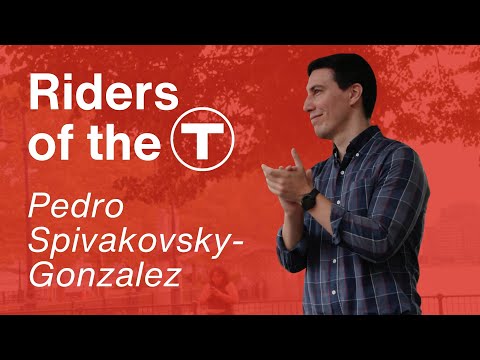
Pedro Spivakovsky‑Gonzalez, executive director of the Community Dispute Settlement Center, introduced himself and outlined the nonprofit’s mediation and legal‑aid work for veterans, students and residents, noting transit access and small staff size as constraints.
Pedro Spivakovsky‑Gonzalez, executive director of the Community Dispute Settlement Center, introduced himself and described his background, military service and the center’s work supporting people who lack access to legal help.
"My name is Pedro Spivakovsky‑Gonzalez and I was born in Boston," he said, noting his family immigrated to the United States and settled in the city. He said he lives in Southie and regularly uses public transit, explaining his commute: "To get to the office, I'm on the 9 bus. From the Broadway stop, I take the Red Line, transfer at Park Street, over to the Green Line to Lechmere."
Pedro said the Community Dispute Settlement Center seeks to "empower individuals and communities to collaboratively solve their problems" through conflict resolution, services and training. "It's a particularly important time for organizations like ours to really be part of the fabric of legal services in the community to be able to support people that otherwise might not be able to afford a lawyer," he said.
He described earlier work as a legal aid lawyer for veterans, and said that experience and his military service influenced his approach to public service. "I was a legal aid lawyer for veterans and a lot of the veterans had legal issues or they had trauma from their time in the military," he said. He added that he later "commissioned myself" and served as an officer and was deployed.
On outreach, Pedro said the center recently worked in East Boston to assess community needs and that much of the organization’s work happens in schools. "If we're able to train kids to mediate themselves, they can resolve issues before they even ever get to the court system," he said, describing school mediation as a preventive strategy.
He also described capacity constraints. "We're a very small team and we do a lot with very little," he said, and urged attention to transportation challenges that limit people’s ability to access services. He observed that local transit infrastructure has changed since he returned from work in Texas, noting "Lechmere is no longer the end of the T" and saying the community is "becoming more diverse."
He closed by urging mutual respect: "We're coming from different places and we have different backgrounds, but we're all on the journey together and trying to respect and understand one another as best we can."