Get Full Government Meeting Transcripts, Videos, & Alerts Forever!
Get email alerts on the Municipal Finance topic
No spam. Unsubscribe anytime.
Peoria Heights board hears finance review showing multi‑year general fund shortfalls, while BDD and TIF face committed obligations
Summary
At a special meeting, village staff presented three‑year projections that show BDD and TIF surpluses but a growing general fund deficit unless revenue or spending choices change; trustees flagged large pending capital obligations and uncertain grant assumptions as key risks.
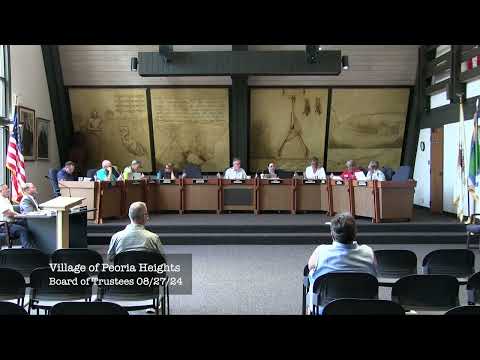
Peoria Heights — Village staff on Tuesday walked the board through a first‑quarter financial review that projects surpluses in the village’s business development district (BDD) and tax increment financing (TIF) accounts but persistent deficits in the general fund over the next three years.
Clerk Stephanie Turner told trustees the village controls about $8 million in accounts, but roughly three‑quarters of that total are restricted. "It’s important to note that approximately three‑quarters of that figure is actually in restricted funds and has limitations on what it can be spent on," Turner said during the presentation. Turner projected a BDD surplus of about $75,000 this year rising to roughly $275,000 in three years, and a TIF surplus near $320,000 in the first year, with declines depending on potential bond payments.
The general fund picture was starker. Turner presented multi‑year projections that show an expected general fund deficit of about $212,000 by the end of the current year, growing to roughly $345,000 the next year and about $486,000 in year three under current assumptions. Those projections assume continuation of a local grocery tax (after the state repeal takes effect), do not include any grant matches after 2024–25, and maintain current service levels.
Turner emphasized the difference between headline cash‑on‑hand and spendable money, noting a recommended gap reserve of at least three months of expenses because the village relies heavily on sales tax revenue. She said that although the village’s BDD cash balance might grow, much of those funds are committed to development agreements and other obligations — including the local match for Prospect redevelopment, HUD Healthy Homes matching funds, and recurring BDD improvement grants.
Staff listed numerous pending capital and department projects that reduce available cash, including an estimated $150,000 local match for Monroe phase one engineering, a West Glenn Avenue mill and overlay estimated at more than $1.3 million, sidewalk replacement projects (roughly $750,000), and a Lake Street mill and overlay (about $750,000). Turner summarized combined pending obligations and delayed department projects at about $5 million.
Wayne Aldridge, the village’s community development director, described a strategy for Prospect Road — finishing the required phase one work to position the village for larger federal or state grants for detailed design and construction. He said the village expects to use a mix of grant pursuit, local matches and, if necessary, bonding for larger phases.
Trustees asked staff to clarify several modeling assumptions: whether the analysis assumed a locally enacted grocery tax after the state repeal (Turner confirmed it was included), whether Save‑A‑Lot would remain (Turner said that assumption was included), and how development agreement transfers were recorded. Turner noted a previously committed $600,000 local match for a Galena Road grant was not in the three‑year projection because construction is expected outside the modeled time window.
The board did not take formal action. Staff told trustees they will bring additional detail and options back to a future meeting so the board can weigh policy choices — such as prioritizing projects, pursuing grants, or using bonding — against the projected gaps.