Get Full Government Meeting Transcripts, Videos, & Alerts Forever!
Get email alerts on the Water Management topic
No spam. Unsubscribe anytime.
Shelby board flags long-running water-district accounting problems, seeks legal and engineering review
Summary
Board members told the public that different water districts have inconsistent effective rates and reserves, and they asked the town attorney, MRB and rural-water consultants to study blended-rate options and long-term maintenance funding before deciding on major infrastructure work.
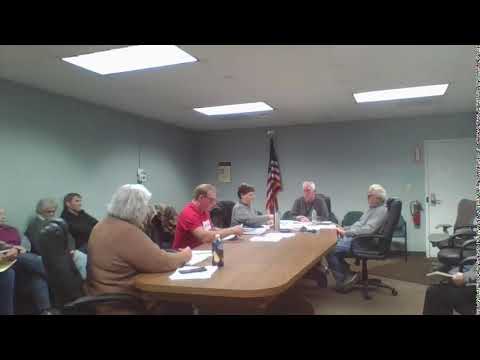
During its budget public hearing, Shelby’s board discussed unresolved water-district accounting issues that could affect rates and fund balances across several special districts. Members said some districts have accumulated reserves while others may have been charged higher effective rates; the board directed staff to obtain legal guidance on whether the municipality may legally adopt a blended rate, and to engage MRB and rural-water consultants to scope engineering and financial options.
Kathy (staff) had not yet received a definitive answer from the state about whether a blended billing approach is legally permissible; the board asked the town attorney to pursue the question. Engineers from MRB provided a rough ballpark during discussion: bringing water supply up the escarpment could cost on the order of $1.2 million to $1.4 million. Board members said they had no appetite for pursuing large capital projects without a clear plan and a vetted funding source; they noted MRB estimates and suggested a rural-water consultant could help identify options, potential grants and a phased approach.
Members also raised operational accounting problems: vault/operational costs may not have consistently been allocated to the correct districts, and some software/charge allocations (for example Williamson Law accounting entries) need reclassification. The board agreed engineering-study funding lines in the budget should be sufficient to cover consultant work (the MRB engineering study was estimated at roughly $20,000), but cautioned that grant funding could not be relied on and that legal review may be needed before any reallocation of rates.
Next steps: staff will ask MRB and suggested rural-water consultants to provide scopes and cost estimates, continue to pursue a state/legal opinion on blending rates, and return with a recommended approach before any decision on capital projects or rate changes.