Get Full Government Meeting Transcripts, Videos, & Alerts Forever!
Get email alerts on the Municipal Violations topic
No spam. Unsubscribe anytime.
City proposal would let part‑time hearing officers ‘live or work’ in Syracuse to address enforcement backlog
Summary
The Municipal Violations Bureau proposed a change to allow part‑time administrative law judges and hearing examiners who 'live or work' in the city to serve, aiming to widen the candidate pool to handle about 4,000 pending parking and automated‑enforcement cases.
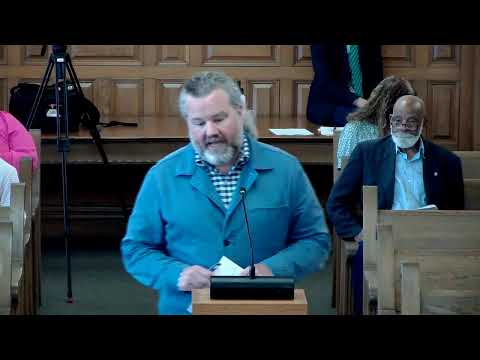
Leah Whitmer, director and chief administrative law judge at the Municipal Violations Bureau, told the council the bureau is short staffed and faces a large volume of disputes from automated enforcement programs. Whitmer said the bureau is proposing an amendment to the traffic code/local law so that part‑time judges and hearing examiners may either “live or work” in the city, expanding eligibility beyond the existing language that required residency.
Whitmer described recruitment efforts—including outreach to local bar and alumni associations—and said the change is intended to improve diversity and increase capacity to issue timely decisions. “We have close to 4,000 pending parking and automated enforcement cases,” Whitmer told the council, urging members that the bureau needs more part‑time hours and diverse candidates to meet due‑process timelines.
Council members asked for clarification about what “work in the city” means; Whitmer said that would include attorneys attached to a law firm or solo practitioners that maintain a physical office in city limits. Legal staff and the corporation counsel’s office said the matter involves traffic code and local‑law language and that short titles will need to be edited to reflect both parking and BAA (automated enforcement) changes.
What happens next: Council discussion focused on legal form and short‑title wording; staff signaled they will refine the legislation and return it for further action. The transcript records discussion and requests for edits but no final vote on the amendment.