Get Full Government Meeting Transcripts, Videos, & Alerts Forever!
Get email alerts on the Evictions Civil Process topic
No spam. Unsubscribe anytime.
Kenosha County deputies say carrying out court-ordered evictions is statutorily required, often dangerous and emotionally fraught
Summary
Deputies Joseph Heismann and Christopher Schneider described the Civil Process Unit’s role in scheduling and executing writs for evictions, saying Wisconsin statutes require the sheriff to run the jail and carry out civil process and that evictions are among the department’s more hazardous duties.
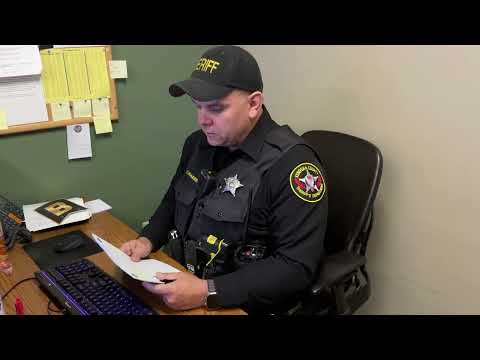
Deputy Joseph Heismann and Deputy Christopher Schneider of the Kenosha County Sheriff's Department Civil Process Unit described the unit’s work on evictions and other court-ordered civil process during a briefing. "A civil process is basically the act of serving papers," the deputies said, noting the work is carried out under Wisconsin statutes that assign certain responsibilities to county sheriffs.
The deputies said Wisconsin statutes require sheriffs to run the county jail and carry out court-ordered precepts or writs of civil process. "There is two things that the Sheriff's Department actually does by statute. Number one is run the jail, and number two carry out all court-ordered, what they call precepts or writs of civil process," they said.
Heismann described the operational steps for evictions: "I handle the evictions, scheduling the evictions, and we'll get the writs from the courthouse. We'll get a hold of the landlords, do what we need to do, and then the two of us actually go out and complete the evictions." The deputies said they coordinate with the courthouse to obtain writs and contact landlords before going to execute an eviction.
The deputies emphasized the personal and safety dimensions of eviction work. "In our view, and in in with many other civil process deputies across the state, that is probably one of the more dangerous things that we actually do. You're actually physically removing somebody from their house, probably when they're already at their lowest point to begin with," they said. They added that the job involves "a lot of emotion" for all parties and is "challenging" but an important part of the department’s duties.
The deputies also reflected on the day-to-day aspects of the assignment, saying the work is unpredictable and provides continuous learning for staff. "It's never going to be a dull day. There's always going to be something you're always going to learn something new," one deputy said.
No formal actions, votes, or policy changes were recorded during the briefing. The deputies framed their remarks as an overview of routine responsibilities and the risks associated with executing court-ordered civil process.