Get Full Government Meeting Transcripts, Videos, & Alerts Forever!
Get email alerts on the Frontotemporal Degeneration Caregiver Support topic
No spam. Unsubscribe anytime.
Caregivers described as a "second patient" at ACL‑supported webinar on frontotemporal degeneration
Summary
At an Administration for Community Living‑supported webinar, Massachusetts General Hospital clinician Katie Brandt and caregiver Marilyn Decalo urged interdisciplinary care, early legal planning and stronger local supports for families affected by frontotemporal degeneration; speakers noted diagnostic complexity and high caregiver costs.
Katie Brandt, director of caregiver support services at Massachusetts General Hospital's Frontotemporal Disorders Unit, and caregiver advocate Marilyn Decalo laid out practical steps for clinicians and community programs at a National Alzheimer's and Dementia Resource Center webinar supported by the Administration for Community Living.
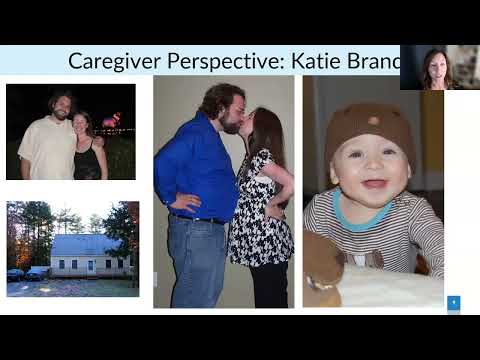
Brandt opened with a personal account of her husband's early behavioral changes, multiple misdiagnoses and an eventual diagnosis of behavioral variant frontotemporal degeneration at age 29. "When you diagnose a person with Alzheimer's, FTD, or a related dementia, you are handing out two diagnoses, one of patient and one of caregiver," Brandt said, arguing that clinicians should treat caregiver needs as integral to the care plan.
The presenters emphasized that frontotemporal degeneration (FTD) often presents with changes in personality, behavior and communication rather than the memory problems commonly associated with Alzheimer's disease. Brandt explained the clinical spectrum—behavioral variants, primary progressive aphasia subtypes, corticobasal syndrome and progressive supranuclear palsy—and said families often need serial assessment and specialist referral to reach an accurate diagnosis.
Decalo described her husband's long diagnostic journey, including an initial diagnosis of early-onset Alzheimer's, subsequent loss of language and eventual diagnosis of progressive supranuclear palsy. "I never thought that there would be people in the world who would want to come in and care for David as much as I care for him," she said, underscoring the role of respite services, home care and community supports in sustaining families.
Speakers cited data on caregiver burden: Brandt said 12 million Americans provide unpaid care for people with dementia and that the annual value of unpaid dementia care exceeds $413 billion. She also noted a 2017 study finding that annual costs for families affected by FTD can be higher than for typical Alzheimer's cases, largely because FTD often strikes people in mid‑career with dependent children.
As a framework for care, Brandt urged a three‑pillar interdisciplinary approach that centers the person with the diagnosis and their care partner and connects the medical team, home supports and patient advocacy communities. Practical steps included continuing to seek specialist referrals until an accurate diagnosis is reached, coordinating clinicians so family caregivers' observations inform care, and early conversations with certified elder law attorneys about decision‑making and finances.
The presenters pointed attendees to resources including AFTD (the Association for Frontotemporal Degeneration), the ALLFTD registry and the National Institute on Aging materials. They encouraged clinicians and community providers—adult day programs, home care and skilled nursing staff—to use local supports to reduce caregiver isolation and help families stay connected to work and community life.
The webinar concluded with an invitation for participants to review slides and the recording, which will be sent to registrants; the host noted the webinar series is supported by the Administration for Community Living and provided an email (NADRC-Webinars@rti.org) for follow‑up questions.