Get Full Government Meeting Transcripts, Videos, & Alerts Forever!
Get email alerts on the Disciplinary Hearing Schedule topic
No spam. Unsubscribe anytime.
Kewaskum Police and Fire Commission sets separate hearings for Chief Bishop and Lieutenant Frank
Summary
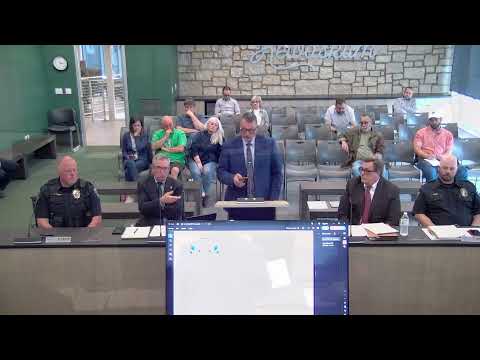
The Kewaskum Police and Fire Commission on April 24 set separate disciplinary hearings for Chief Bishop and Lieutenant Frank, adopted an expedited May briefing schedule and agreed exchange deadlines ahead of June hearings; the panel then voted 5–0 to meet in closed session to consult with counsel.
The Kewaskum Police and Fire Commission on April 24 agreed to hold separate disciplinary hearings for Chief Bishop and Lieutenant Frank and set a timetable for pre-hearing briefs and evidence exchanges.
At the meeting, Attorney Kevin Scott urged a single combined hearing “in the best interest of all parties” because he expects overlapping witnesses and issues. Ron Stadler, another attorney, disagreed: “I would not be in favor of a joint hearing,” Stadler said, arguing the charges against the chief and the lieutenant are distinct and that a combined proceeding risks conflating evidence.
Attorney Bob Mileik, who said he represents Chief Bishop, told the commission the complaints are largely similar and that consolidation would be more efficient. Attorney Curtis, the commission’s legal adviser, recommended separate hearings to preserve a clean administrative record and reduce appellate risk: “I would tend to agree that … it would probably make sense to have two separate hearings,” Curtis said.
The commission and counsel agreed on an expedited pre-hearing briefing schedule in May: initial briefs from the chief and lieutenant by May 15, responses from the village about May 22, and short reply briefs about May 29. Parties also agreed to exchange witness lists and exhibit lists roughly one week before each hearing and to coordinate a court reporter and the municipal hearing room.
On dates, the commission set the chief’s hearing for June 16, 2026, with June 17 reserved as a fallback day; witness and exhibit exchanges for that hearing were discussed for about June 9. The lieutenant’s hearing was scheduled for the week of June 22 (parties discussed June 22–23 options); corresponding exchange deadlines were discussed at roughly one week before that date. Counsel and commissioners discussed daytime hearings, page limits on briefs (proposed 10 pages for initial briefs, five pages for replies) and limiting post-hearing briefing to keep the schedule compact.
Commissioners also discussed subpoena authority and public-records requests; counsel noted the commission may issue subpoenas and that attorneys can also issue subpoenas for witnesses. Commissioners emphasized they expect parties to cooperate in exchanging evidence and said depositions were not anticipated.
The body formally moved to have Attorney Curtis circulate a written memorializing schedule; that motion passed. The commission then voted, 5–0 by roll call, to go into closed session under Wis. Stat. § 19.85(1)(g) to confer with legal counsel about litigation strategy. Chairperson Latch said the closed session would include commission members and counsel only.
What happens next: Attorney Curtis will circulate a draft schedule for party review. The commission’s adopted timeline contemplates a written decision shortly after each hearing if no post-hearing briefing is requested; each final decision will trigger the statutory appeal window.