Get Full Government Meeting Transcripts, Videos, & Alerts Forever!
Get email alerts on the Home Businesses topic
No spam. Unsubscribe anytime.
Scarborough council approves food-handler licenses for three home-based seafood sellers amid debate over home-occupation rules
Summary
The Scarborough Town Council voted Jan. 6 to grant food-handler licenses to three home-based seafood sellers after heated public comment about whether home-occupation exemptions unfairly subsidize storefront operators. Councilors agreed licensing and zoning review are separate and said ordinance changes are forthcoming to clarify home-occupation limits.
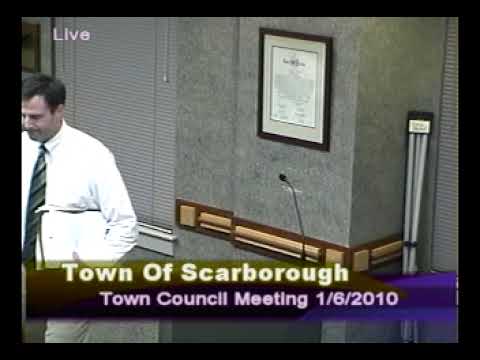
Scarborough — The Scarborough Town Council voted Jan. 6 to approve food-handler licenses for three applicants operating lobster and seafood sales from residential properties, after public comments and council debate about whether the permits undercut businesses in commercial zones.
Resident Martin Miso, who identified himself and his Route 1 address during the public-comment period, told the council that appeals-board exemptions allowing home-based businesses to operate retail services outside business zones amount to an unfair subsidy. “When they issue these special exemptions for the home businesses, it seems like it's a subsidy,” Miso said during public comment, urging the council to ask applicants why they do not move into vacant commercial space.
The licenses considered were for Turner's Lobsters (Greg and Debbie Turner, 213 Pine Point Road), Donald Jackson Jr. (Griffin's Lobster Barn LLC, 6 Vinegar Way) and Terra J. Tumi (Two Tides Seafood, 397 Gorm Road). Council members stressed that the council's licensing authority is distinct from the Zoning Board of Appeals (ZBA), which granted home-occupation approvals to the applicants.
Counselors acknowledged neighborhood-impact concerns — hours, signage, vehicle traffic and whether the uses exceed conditions approved by the ZBA — and discussed the town's enforcement tools. Councilor Alquist said complaints that an operator had expanded hours beyond what the ZBA approved warrant code-enforcement follow-up. Town Manager Tom Hall said the town's records show the applicants "are in compliance with the code office" for licensing, and he pledged to follow up with code enforcement about any conditions attached to the ZBA approvals.
Several councilors said they support home-based businesses in principle but want clearer ordinance language to distinguish low-impact home occupations from retail operations that resemble storefront businesses. Councilor Wood and others said the ordinance committee will draft clearer home-occupation definitions and consider whether some uses belong in business zones. Councilors concluded that denying licenses when applicants had met licensing and ZBA requirements would unfairly penalize those who followed the process.
The council approved the three food-handler licenses by unanimous voice vote. Councilors also agreed to refer broader changes to the home-occupation definition to the ordinance committee for revision.
What happens next: Planning staff said they are preparing a draft ordinance to better define home occupations and to present it to the ordinance committee for possible change later this year. The council’s action on the licenses covered only food-safety requirements; any questions about zoning compliance remain under code-enforcement and the ZBA’s purview.