Get Full Government Meeting Transcripts, Videos, & Alerts Forever!
Get email alerts on the Permitting topic
No spam. Unsubscribe anytime.
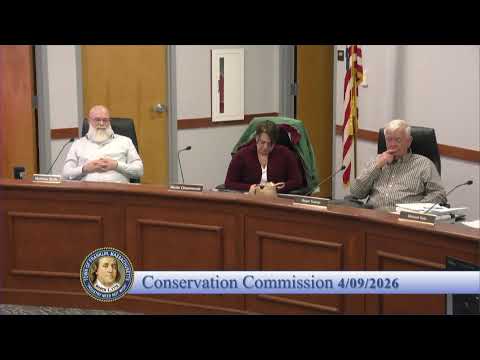
Conservation commission approves temporary access for 160 Maple solar project with timber‑mat condition
Summary
The Franklin Conservation Commission approved a permit modification for a temporary access road at the 160 Maple Street solar project, requiring timber mats (no gravel or culvert changes), monitoring of wetland condition and administrative sign‑off on mat specifications.
The Franklin Conservation Commission on April 9 approved a permit modification that allows a temporary equipment access across wetlands at the 160 Maple Street solar project, but only if timber mats are used and wetland impacts are closely monitored.
Andrew, the applicant’s representative, told commissioners the project team had produced a stamped civil plan showing two construction options: a gravel base with an 8‑inch concrete cover and an alternate timber‑mat system that would span wetland areas. He said the stamped plan and before‑photos were submitted so the site could be restored when work finishes. “This is just a temporary access way…when we’re all said and done with the temporary access way, we would remove all of the gravel base,” Andrew said.
Commissioners and staff focused on minimizing wetland disturbance. Brialai, the commission staff member with delegated administrative authority, recommended avoiding gravel and redirected culverts to preserve the hydraulic connection across the wetland. After discussion of mat types and soil disturbance, the commission conditioned approval on use of timber mats, elimination of the proposed 8‑inch RCP culvert and any gravel additions, smoothing of ruts after mat removal, monitoring of wetland condition and return of the site to its prior state per the submitted photos. Brialai was given administrative authority to approve the exact timber‑mat specifications.
Matthew Sto moved to approve the permit modification “as stated.” A second was recorded and the commission approved the motion by voice vote. The commission noted an administrative permit modification will be issued and that there is no appeal period for a permit modification, allowing the applicant to proceed after receiving the signed modification.
The permit record will reflect the condition that timber mats, rather than a gravel road or a new culvert, be used at the wetlands crossing; the commission also required photo documentation and monitoring to verify site restoration once the mats are removed.