Get Full Government Meeting Transcripts, Videos, & Alerts Forever!
Get email alerts on the Infrastructure Environment topic
No spam. Unsubscribe anytime.
Orangetown hearing on Databank's Phase 2 draws broad public opposition; board delays decision pending technical studies
Summary
Residents, county planners and town consultants raised concerns about Databank's proposed Phase 2 data center (30 MW demand, wetlands impacts, diesel generators, visual and noise effects); AKRF/AKF recommended further traffic, air, noise and visual studies and flagged the likely need for an environmental impact statement; the board took no vote and the applicant will return with additional materials.
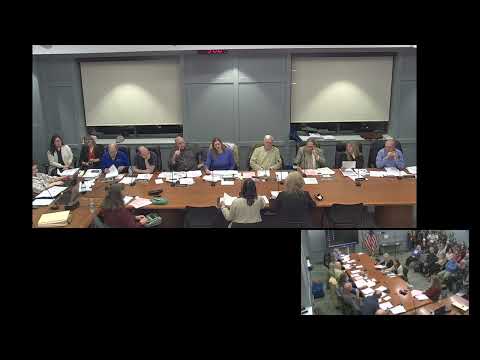
Orangetown planning officials heard hours of testimony on Oct. 21 as Databank presented plans for a proposed Phase 2 data center expansion that residents and consultants said could have significant environmental and infrastructure consequences.
Lo Sharetta, attorney for the applicant, said the company was not seeking approvals that night but wanted feedback and an affirmation of the board's intent to be lead agency under SEQRA. The applicant described Phase 2 as a mirror of an earlier building (Phase 1) and estimated each new building would draw roughly 30 megawatts of power; the applicant said NYISO has approved the capacity in principle while Orange & Rockland (the local utility) is completing a feasibility study to determine how to deliver the power.
Town consultants from AKRF and AKF delivered detailed critiques, listing more than 60 technical comments that the applicant must address. The consultants asked for updated parking and loading studies, a visual assessment from nearby public vantage points, an economic/fiscal analysis, a detailed air-quality assessment for diesel backup generators, and noise modeling; AKF noted that Phase 2 is a Type I action under SEQRA and recommended the board consider a positive declaration and require an environmental impact statement (EIS) to study cumulative impacts with Phase 1 and other nearby facilities.
Many residents and local stakeholders urged the board to deny or at least pause the application. Arguments raised during public comment included: - Zoning and procedural objections: multiple speakers said the LIO zoning and prior board conditions (including a land-banked parking requirement tied to Phase 1) preclude Phase 2 as currently proposed and cited letters and legal opinions submitted by neighbors. - Power and grid concerns: technical and resident speakers pressed for a written commitment from Orange & Rockland confirming deliverability, and warned that large new demand could strain regional transmission and raise rates for customers. - Environmental and public-safety concerns: speakers urged careful review of wetlands impacts and required DEC approvals, questioned diesel generator operations and refueling plans, and flagged potential impacts on bald-eagle habitat. - Quality-of-life impacts: residents described existing noise and light from Phase 1 and warned that a second, larger facility would worsen conditions.
Representative quotes captured during the hearing included applicant counsel Lo Sharetta, who said the company was there "to just get some feedback a from the board" and was not requesting approvals that night, and resident David Rosen, who said a proposed structure "is massive...it sits just 79 ft from the watershed boundary" and urged denial.
Board members and consultants agreed the record is incomplete. They asked the applicant to supply documentation from Orange & Rockland and NYISO, an updated visual assessment and landscape plan, responses to AKRF's comments on traffic and loading, detailed noise and air-quality modeling for diesel generator use, and New York State DEC responses on wetlands. Multiple planning-board members indicated it was premature to make a positive SEQRA declaration before a revised project submission and requested the applicant return with the requested studies. The board declined to take any votes that night and expects the matter to return to future meetings for further technical review and public comment.
The hearing added to an ongoing debate in Orangetown about the role of data centers in the LIO district, the adequacy of the town's code and the balance between regional infrastructure needs and local environmental and neighborhood impacts.