Get Full Government Meeting Transcripts, Videos, & Alerts Forever!
Get email alerts on the Tree Trimming topic
No spam. Unsubscribe anytime.
Committee urges pause on NES 'ground‑to‑sky' trimming while council reviews data
Summary
The Rules, Confirmations & Public Elections Committee passed a non‑binding resolution urging Nashville Electric Service and the Electric Power Board to pause the most drastic tree‑trimming practices while council members review additional data; NES outlined outreach changes including postcards and a hotline and said crews and quality control have recently stabilized.
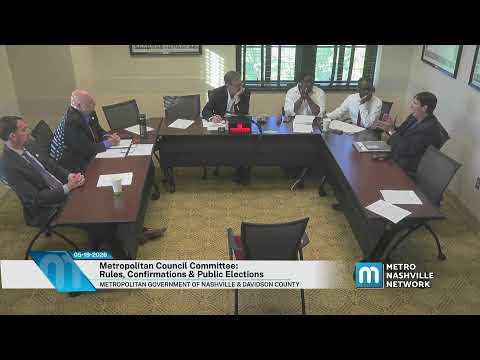
The Metro Nashville Council Rules, Confirmations & Public Elections Committee voted to urge Nashville Electric Service (NES) and the Electric Power Board to pause the most drastic elements of recent vegetation‑management changes while the council reviews detailed data.
Council Member Allen, the resolution’s sponsor (submitted by letter to the committee), said the item asks only for a temporary pause on the most extreme trimming — including a practice sometimes described as “ground‑to‑sky” trimming — so council members can review the underlying data and better explain the policy to constituents. “We are not asking anybody to stop trimming,” Allen said in the committee; the resolution is non‑binding.
NES representatives told the committee the utility adopted more aggressive trimming after winter storm Fern to reduce outages. Laura Smith, a Nashville Electric Service representative, said, “Tree trimming can be very painful. Trees are the number one cause of outages,” and that the utility believes more aggressive clearance reduces outage risk. Daniel Johnson, NES’s vice president of engineering, described operational measures the utility has taken since the policy change: “We are now sending postcards to everyone” with scheduled trimming and have established a vegetation‑management hotline and on‑site arborists to answer questions. Johnson said crews have recently stabilized and staff are performing quality control checks and door‑knocking to notify residents in advance.
Council members pressed NES on communications, species‑sensitive pruning, and whether crews trained from outside the area were following updated practices. Council Member Kitchen said the council needed to be mindful that “anything that’s happening, once it’s cut, it’s cut.” Council Member Spota asked about arborist staffing; NES replied it has seven senior utility arborists on staff and contract arborists for planning and auditing.
NES officials also described the reliability tradeoffs. Johnson explained that conductors can swing several feet in high winds and that reduced clearances increase the risk of faults during storms. At the same time, council members said they want better public outreach and more nuance for different species and for locations where communications lines are present.
The committee noted a meeting with members of the NES board and outside experts scheduled for June 11 that the sponsor and others said could answer many outstanding technical questions. After discussion, the committee approved the non‑binding resolution urging a temporary pause and additional review; the chair announced the result as six in favor with one abstention.
The resolution is advisory; NES told the committee it will continue to pursue reliability goals while engaging with councilmembers and residents. The June 11 meeting and follow‑up information requests were identified as the next steps for committee members.