Get Full Government Meeting Transcripts, Videos, & Alerts Forever!
Get email alerts on the Budget topic
No spam. Unsubscribe anytime.
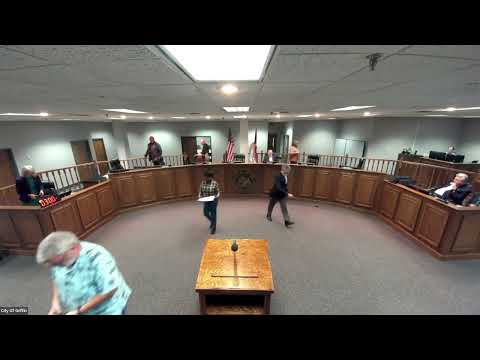
Griffin commissioners approve budget amendments after tense debate; Ward votes no
Summary
The Griffin Board of Commissioners on Nov. 12 approved resolutions amending the city’s FY2023–24 and FY2024–25 operating and capital budgets after extended discussion about rollovers and fund sources. Commissioner Ward said he opposed the amendment in protest over a perceived lack of input.
The City of Griffin Board of Commissioners on Nov. 12 approved a resolution amending the city’s FY2023–24 and FY2024–25 operating and capital budgets after an extended discussion about fund rollovers, grant accounting and where money for pay increases would come from.
The board’s finance director, Deborah Manning Gilbert, told commissioners the general fund had recorded $4.4 million in revenue to date and explained that certain funds—particularly ARPA grants—must be held as a liability and can’t be recognized as revenue until the city has obligated qualified expenditures. She also described an airport pavement project paid largely by a Federal grant with smaller state, city and county shares and said reimbursement occurs after qualified expenditures are incurred.
“Those are the funds that we have not yet expended and fully obligated that will be obligated within this year,” Manning Gilbert said, describing the ARPA accounting rules and the requirement that the funds be obligated before the end of the calendar year and spent by 2026.
Commissioner Ward pressed for more detail about how rollover funds accumulate and where money for employee pay increases would come from. He said residents in his district bore a disproportionate share of utility and other rate increases and that he had not been given adequate input on the decisions. “I’m not going to vote for the budget amendment… it’s not because it’s not going to happen but it’s in protest,” Ward said.
Commissioner Murray moved the resolution; the motion was seconded and, after debate and clarifications from the finance director about restricted, reserved and operating funds, the board voted to adopt the amendment. Ward expressed frustration that he had not been consulted more thoroughly; his opposition was recorded in the minutes.
The amendments were described in the meeting packet and read into the record. The transcript includes detailed fund percentages and examples but does not provide a single, unambiguous line-item total in the spoken record as transcribed; the finance director indicated the changes reflect year-end cleanups, rollovers for projects delayed by supply-chain issues and obligations for projects scheduled for 2025.
The board’s action adjusts the city’s fiscal planning to reflect those rollovers and obligates funds the city expects to spend in the coming fiscal year. The minutes record the vote and dissent; the resolution carries forward projects the city has already obligated or plans to obligate in the near term.