Get Full Government Meeting Transcripts, Videos, & Alerts Forever!
Get email alerts on the Ems Facility topic
No spam. Unsubscribe anytime.
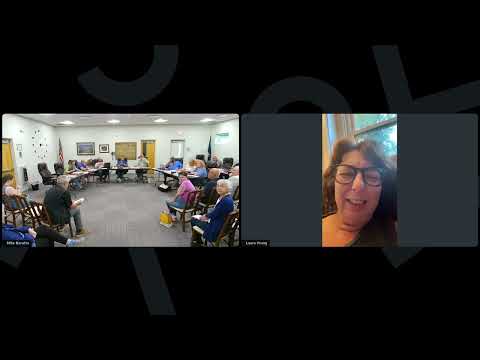
EMS leaders press Owego trustees for new facility and scoping work; board to help pursue grants and property options
Summary
Local EMS officials told trustees the current 1911 building lacks exhaust removal, secure storage, crew quarters and decontamination facilities, and the board agreed to explore properties and grant-funded scoping studies to address long-term needs.
Owego’s emergency medical services leaders told the village board the ambulance corps is operating from an inadequate, century-old facility and urged a planning and grant-seeking effort to secure a new, code-compliant building.
Derek (OEMS representative) and EMS leadership described structural and operational shortfalls: the building lacks an exhaust-mitigation system for diesel fumes, has no adequate crew quarters or kitchen, offers insecure storage for equipment and controlled substances, and cannot safely accommodate larger modern chassis. "The building was built in 1911 and is grossly insufficient as an operable EMS building," the presenter said, listing missing features such as decon capability and secure storage.
EMS presented a needs assessment that identified space requirements for five ambulances, dedicated decontamination and vehicle‑exhaust systems, gender-neutral facilities and room for training and administrative work. Officials proposed pursuing grant programs (USDA community facilities, CDBG, regional capital funds) and working with the land bank and county for potential sites. One property noted as potentially favorable was 54 Temple Street; the land bank indicated interest in donating certain lots if the village could secure adjacent parcels.
Trustees and EMS chiefs discussed next steps: forming a small working group of trustees and EMS representatives to refine a scoping study, seek engineering and grant-writing assistance, and assemble an application package for planning or capital grants. Board members said it would likely be cheaper to build a new facility to code than to renovate the existing station, and discussed potential co-location with police or fire if appropriate. The board did not commit funding for construction that night but directed staff to develop an RFP for a scoping/engineering study and to investigate grant options.
Separately, the board voted to approve volunteer and part‑time hires for EMS—two volunteer members and two part‑time paid EMTs—intended to bolster capacity while the trustees pursue a long-term facility plan.