Get Full Government Meeting Transcripts, Videos, & Alerts Forever!
Get email alerts on the Student Services Policy topic
No spam. Unsubscribe anytime.
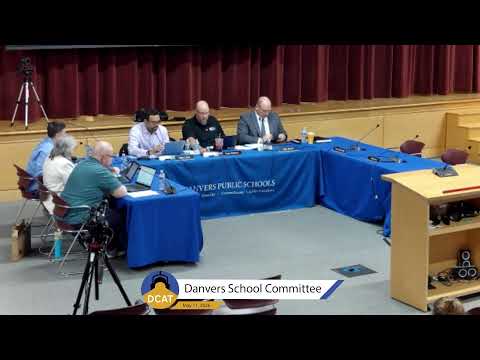
Danvers School Committee holds first reading of tightened timeout, seclusion and restraint policy after CPAC public comment
Summary
After public comment urging the committee not to adopt changes to timeout and seclusion rules, the committee approved a first reading of amended policy JKAA to align with new DESE regulations; the amendments narrow definitions and add documentation, medical and licensed‑professional requirements.
The Danvers School Committee held a substantive policy discussion and approved a first reading of amendments to policy JKAA, which governs timeout, seclusion and physical restraint in district schools. The first reading followed a public comment from CPAC and an extended presentation by district student‑services staff explaining how the amendments align with recent DESE guidance.
Public comment and context: Julie DeFilippo, who identified herself as chair of the Dever C PAC, urged the committee to delay action on the policy changes and called timeout/seclusion rooms "traumatizing children," saying the practice disproportionately affects students with special needs and that training is insufficient. "I urge you to not act on this... it is the same exact thing and it's traumatizing children," she told the committee. Her remarks were echoed in later committee questions about safeguards and family communication.
Staff presentation and key changes: Christina Ryan, director of student services, outlined several substantive changes staff propose in order to meet new state guidance. She said the revised approach draws a clearer separation between timeout (an unlocked space a student may leave) and seclusion (a separation from the learning environment). She emphasized emergency seclusion should remain extremely limited and said it requires a demonstration of imminent risk: "There needs to be an imminent threat of assault or imminent risk of serious physical harm," Ryan said. The amendments also call for documentation that de‑escalation attempts were exhausted, a documented history of repeated self‑injury or injury-to-others, documentation from a licensed mental‑health professional supporting the use, and physician documentation that seclusion would not create medical risk.
Training, monitoring and room standards: Ryan said any seclusion environment must be appropriately sized, ventilated, code‑compliant and continuously monitored with a staff sightline; such rooms should be free of hazards and appropriately sized for the age and size of the student. The district described its current safety training program (Safety Care/CPI) and said select staff are certified trainers; it committed to expanding training and to incorporating state‑specific requirements into in‑district professional development.
Committee reaction and vote: Committee members pressed staff on how licensed‑professional documentation would be obtained proactively, whether families could opt out, and the real‑world application in emergency incidents. Staff and the superintendent said the amendments narrow prior definitions, add procedural safeguards and are intended to make seclusion rarer and more documented. The committee approved the proposed amendments for a first reading on a 4–0–1 vote (one abstention). The district will develop written procedures, training materials, and family engagement plans before the regulation implementation deadline noted by staff.
Why it matters: The amendments respond to state regulatory changes and affect the district’s behavior‑management practices, reporting obligations, and training. Families, advocates and staff will want to see the forthcoming procedures and training materials and will have additional opportunities for input before a final vote.
Next steps: Staff said they will finalize procedures, training, and family notification plans and bring the item back for a second reading and final adoption; the district cited an August regulatory timeline as the target for compliance.
Ending: The committee approved the first reading and directed staff to continue consultation with families and CPAC as policy procedures are developed.