Get Full Government Meeting Transcripts, Videos, & Alerts Forever!
Get email alerts on the Business License topic
No spam. Unsubscribe anytime.
Holbrook council holds first reading of citywide business license ordinance after months of debate
Summary
At a Nov. 12 first reading, councilors reviewed Ordinance 25-06 to require business licenses for operations within city limits, including home occupations and provisions for health‑department certification; the measure will return for a second reading in December.
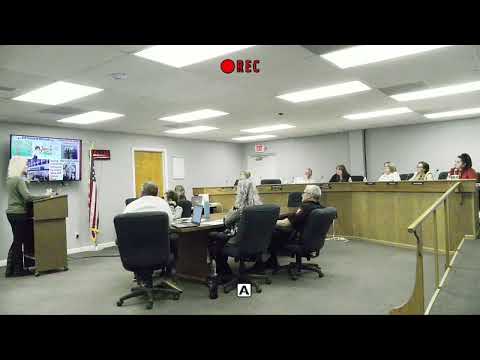
At its Nov. 12 meeting the Holbrook City Council held a first reading of Ordinance 25-06, which would add a citywide business-license requirement to chapter 2 of the Holbrook City Code. The ordinance was presented by administration as a first read; councilors will not vote on it until the next meeting.
Manager Sullivan summarized the proposal’s goals: to track active businesses, support economic development, and ensure compliance with zoning and safety regulations. The draft ordinance would require every person engaging in business within city limits to apply for a license and would allow the council to establish any annual fee later by resolution. Sullivan told the council that, for now, staff set no fee in the ordinance itself.
Key provisions described in the draft and discussed by council and staff included:
• License requirement and application process: Applicants would file with the building department; the department has 10 days to notify applicants if additional information is required and would provide written reasons if an application is denied.
• Health‑department certification: Certain businesses (food service, hotels/motels, RV parks, child care, animal‑related uses) would require certification from the Navajo County Health Department before a license could be issued, and applicants must submit that certification to the building department.
•Term, renewals and fees: Licenses would be valid for one year from approval; fees would be established later by council resolution (the draft retains a fee‑setting clause but does not set a dollar fee at first reading).
•Penalty schedule in the draft: The ordinance text read in the packet describes a civil-penalty approach with a first violation listed as a $150 penalty, a second violation at $250, and a third at $500. Council members debated whether that structure was appropriately scaled and whether the code should allow discretion.
Council members and members of the public raised several recurring issues during the discussion: how the ordinance would be phased in for existing businesses; whether inspections would be mandatory for all license applicants (staff said inspection requirements would depend on business type and that the building department would coordinate permits and inspections); how home‑based businesses would be handled and whether neighbors would be notified; and whether the city should finalize zoning and planning updates before requiring licenses.
Barbara Bly of code enforcement said staff have encountered unpermitted operations with electrical and other safety deficiencies and argued licensing is a first rung to ensure public safety. Other councilors urged leniency for long‑established small businesses and discussed potential grant funding or city assistance to help older properties come into compliance.
The ordinance remains at first reading; administration invited council members to submit specific language changes to staff and legal counsel. The council did not vote on final adoption; the next reading is scheduled for December.