Get Full Government Meeting Transcripts, Videos, & Alerts Forever!
Get email alerts on the Public Health topic
No spam. Unsubscribe anytime.
Regional public‑health proposal: Northeast District seeks town support for opioid prevention program
Summary
The Northeast District Department of Health proposed a five‑year regional opioid prevention and harm‑reduction program funded from opioid settlement dollars to support surveillance, Narcan distribution and youth prevention; NDH requested town authorization and a contribution from municipal settlement funds to seed the $85,000 first‑year budget.
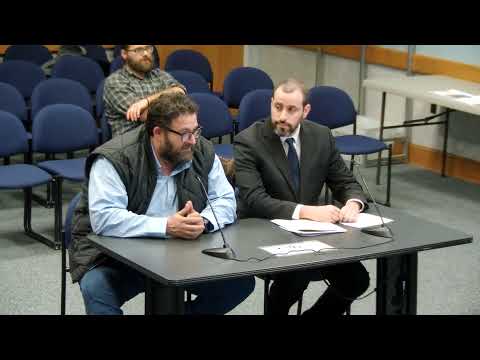
Northeast District Department of Health staff presented a regional proposal to use opioid settlement funds from multiple towns to create coordinated prevention services across 12 municipalities, including Killingly. NDH staff said the plan focuses on surveillance (monthly overdose reporting), prevention programming for younger residents, Narcan distribution and training, hygiene kits, improved connections to recovery and social services, and an evaluation framework with measurable targets.
NDH said recent regional data show dozens of emergency department suspected overdoses and a multi‑year decline in fatal overdoses statewide, but persistent local needs in northeastern Connecticut where outpatient mental‑health and substance‑use treatment capacity is limited. The department’s five‑year timeline calls for establishing governance and an advisory group in year one, distributing naloxone and hygiene kits in year two, formalizing hospital and recovery partnerships by year three, pursuing state and federal grants by year four, and targeting a 10% reduction in overdoses by year five.
NDH requested that Killingly authorize the district to coordinate opioid‑related services on the town’s behalf, commit settlement funds to the regional plan and designate a municipal liaison to the advisory group. The department budgeted roughly $85,000 for year one to cover a coordinator position, outreach, trainings and supplies; NDH said it will seek additional grant funds to expand and sustain the program.
Councilors asked whether the regional proposal duplicates existing local prevention work, including Killingly’s youth substance‑prevention coalition and other nonprofits. NDH said partners will be integral, that the program aims to avoid duplication by coordinating with existing coalitions and by offering services where towns lack capacity, and that the district will produce frequent reports and a midcourse evaluation to track progress.
No formal vote was taken at the meeting. Councilors requested further detail on town‑level funding allocations and possible overlaps with existing local efforts; the district offered to provide monthly surveillance reports and meet with local stakeholders to refine the proposed scope.