Get Full Government Meeting Transcripts, Videos, & Alerts Forever!
Get email alerts on the Environmental Health topic
No spam. Unsubscribe anytime.
DEEP says PFAS found in private wells near Rogers fire‑training area; state offers testing, bottled water and whole‑house treatment
Summary
State DEEP officials reported multiple private wells in the Rogers area with elevated PFAS (PFOA) above public‑health guidance, described testing rounds and offering whole‑house granular activated carbon treatment systems and bottled water while source investigations continue.
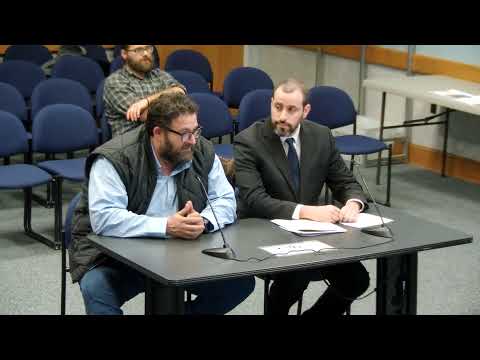
State Department of Energy and Environmental Protection officials briefed the council about an ongoing PFAS testing and response program focused on the Rogers section. DEEP director of remediation (Ray Fergon) and PFAS coordinator Megan Lai described the chemical family known as PFAS, exposure pathways and the state's targeted testing of private wells near fire‑training facilities and other potential sources.
DEEP told the council it identified multiple private wells with elevated PFOA concentrations. DEEP said the department’s public health guidance recommends homeowners not drink water above 16 nanograms per liter (ng/L) of PFOA; DEEP reported that initial homes in the first round averaged roughly 400 ng/L in some cases and that many wells tested in subsequent rounds still showed measurable PFAS at lower but concerning concentrations. DEEP expanded sampling outward after high levels appeared in the earliest sampled homes and said that, to date, dozens of properties have been offered testing and treatment.
Megan Lai explained how PFAS can come from firefighting foams, landfills, wastewater and household products that pass through septic systems, and that PFAS are odorless and tasteless so only laboratory testing can detect them. DEEP said it prioritized Rogers because the town has a fire‑training facility and also holds a disadvantaged community designation that could limit residents’ ability to respond without state assistance.
DEEP described its response protocol: outreach letters, door knocks, testing of eligible private wells (residential wells, not properties on public water), rush lab analysis for rapid notification, bottled water provision for people with high results and an offer to install a point‑of‑entry (whole‑house) treatment system using granular activated carbon. DEEP said it retests three weeks after installation to confirm removal; in the installations the department has completed, treated taps showed nondetect PFAS on follow‑up tests.
DEEP staff said the pattern of detections suggests multiple potential sources and that the agency is using chemical ‘‘signatures’’ and groundwater data to try to identify likely contributors; DEEP staff also said EPA and the state have prior records of investigations at some nearby historic industrial sites and that the state will pursue responsible parties where the evidence supports that action.
Councilors and residents asked about health impacts and blood testing. DEEP and the Department of Public Health representatives said PFAS exposure is a long‑term, chronic risk, particularly for sensitive groups (infants, pregnant people and some elderly residents), and advised participants to consult public health staff for medical questions. DEEP encouraged residents who receive test kits from other local programs to share results so the state can evaluate whether additional response is warranted.
DEEP said it will continue rounds of testing, expand offers to seasonal properties when they are occupied, and coordinate with town staff and the health district on outreach. The agency provided a contact for residents seeking testing or more information and noted an upcoming community meeting organized by other partners that will offer home test kits (a separate program from DEEP’s targeted sampling).