Get Full Government Meeting Transcripts, Videos, & Alerts Forever!
Get email alerts on the Rental Registry topic
No spam. Unsubscribe anytime.
Council Member Nick Bangston outlines Columbus rental registry to track landlords and protect tenants
Summary
Council Member Nick Bangston described the newly approved Columbus City Council rental registry as a tool to collect ownership and contact information, require periodic education/inspection, and create a public portal so renters can check registration and landlords can show compliance.
Columbus City Council member Nick Bangston said the council-approved rental registry will register all rental properties inside city limits, collecting ownership and contact information so the city can identify who is responsible for buildings and act on safety concerns.
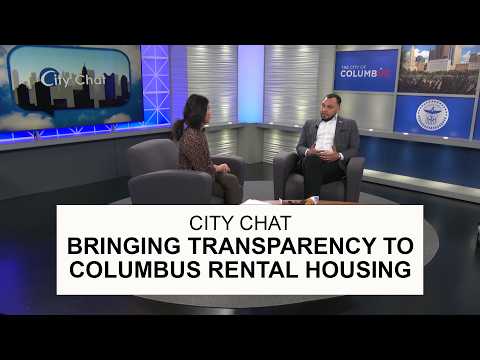
"It's to register all rental properties in the city limits," Bangston said on CTV's City Chat. He said the registry's purpose is both to produce reliable data about the local housing market and "to hold landlords accountable" so renters live in safe, healthy conditions.
Bangston told host Josie Smith the registry goes beyond the county-level data required by the Ohio Revised Code, which he described as often poorly enforced and not consistently verified. "The county ... has some basic information around who the ownership structure is. There's no accountability there to check it, to verify it, to update it," he said.
Under the city proposal, owners would be responsible for registering each property and furnishing core details: the owner name or entity, the regular on-site contact for maintenance, an emergency contact, how many units are on the property and whether mechanical systems such as boilers are shared. Bangston said the city would also track inspection dates for shared systems to better understand building conditions.
City staff from the Department of Building and Zoning Services and the technology department are working with stakeholders on implementation, Bangston said. Some additional fieldssuch as recycling availability or average rentwould be optional for landlords to provide.
Bangston cited high-profile displacement episodes at properties including Latitude 25 and Colonial Village to illustrate why registration matters, saying some residents were displaced during the holidays. He contrasted those headline cases with "every single day" problems tenants face, such as no heat or leaking roofs, that the registry aims to surface earlier.
A key feature will be a public-facing portal so prospective renters can check whether a property is registered. "If it's not, that's probably maybe a red flag," Bangston said, adding that the portal could also help landlords market properties that are in good standing.
The ordinance includes a mandatory education/inspection every three years, Bangston said, framed as proactive rather than punitive: "it's not an inspection where we're looking to ding folks, but it's more or less how do we get ahead of problems." The council also built a three-year lookback into the legislation to evaluate the registry's effectiveness and make adjustments.
Bangston described housing as a human right and emphasized the need to balance tenant protections with the realities landlords face as small business owners. He said the registry is intended to strengthen dialogue and provide resources that prevent problems from escalating.
The council-approved registry will move to city departments for implementation; Bangston said staff will continue stakeholder engagement as the city sets up the registration portal and inspection procedures.