Get Full Government Meeting Transcripts, Videos, & Alerts Forever!
Get email alerts on the Special Assessments topic
No spam. Unsubscribe anytime.
Committee presentation flags 69% rise in special assessments since 2010; committee recommends against citywide street-lighting charge
Summary
Dale—s capstone brief found special assessments rose about 69% from 2010–2023; the committee debated a proposal to fund street-lighting electric costs via a special assessment and moved not to recommend a citywide street-lighting assessment, instead urging further study if neighborhood-only assessments are considered.
Dale presented a policy brief that focused the committee on a sharp growth in local governments— use of special assessments and on trade-offs for East Lansing.
"We saw growth...from local governments by 69% between 2010 and 2023," Dale said, summarizing statewide data he compiled from annual financial reports. He outlined two common forms of special assessments: (1) project-specific assessments dividing a project—s cost among affected properties, and (2) ad valorem (unitwide) assessments that apply broadly, for example across a township to support a service. He warned ad valorem special assessments run the risk of appearing as a tax without voter approval because they do not require the same ballot step.
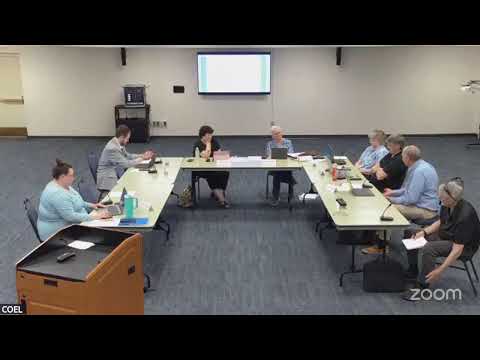
The committee then debated a proposal to convert street-light electricity costs to a special assessment. Members ran preliminary math and noted the total in the packet (presented as 1.334 million) could translate into roughly $100–$150 per parcel per year if levied citywide but would fall substantially for neighborhood-only assessments. Objections included legal risk (some members compared the charge to a franchise fee issue), fairness (charging residents without street lights), and insufficient information about how costs would be apportioned.
A committee member moved "not to approve this" recommendation for the street-lighting special assessment; the motion was seconded and the committee recorded support. The committee instead recommended that the city further study the street-lighting option and, if pursued, examine neighborhood-level allocations with precise cost estimates and legal review.
Next steps: staff to return with more granular cost breakdowns, legal analysis on franchise-fee precedent, and a neighborhood-level cost model if the city council requests additional study.